

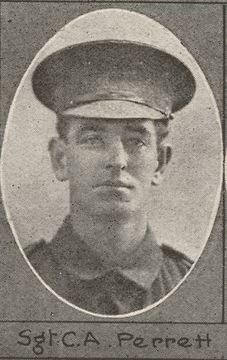
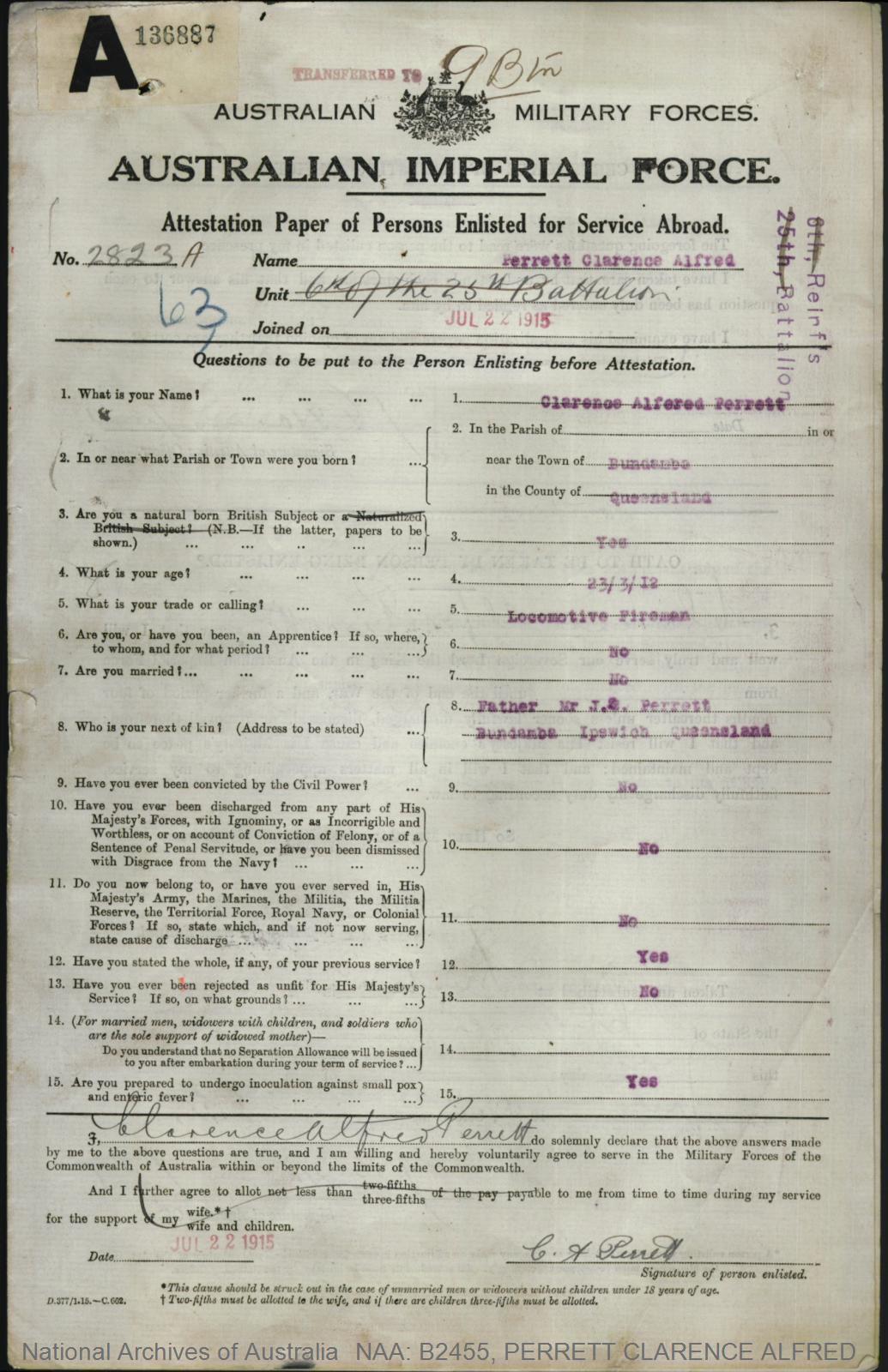
On 8 January 1918, the Queensland Times published a letter by Alf Perrett who was serving in Europe. Ipswich soldiers often wrote to the Times and their letters included updates on other local soldiers they had recently come across. The Times, for their part, sent copies of the newspaper back to the war, which, it can be assumed, allowed the letters to be widely read among Ipswich soldiers keen to hear about their friends.
Perrett himself was mentioned in a letter by fellow soccer player Jas McKenzie, published by the Times on 1 February 1916, and again in November of that year in a letter from one Charles Wall. Wall saw Perrett from a train window. Wall wrote, “I sang out to him, and he replied that he was doing well so that you can tell his people that he is also alright.”
Perrett’s letter from January 1918 included mentions of several local soccer players:
There are a few Ipswich ‘soccer’ players in this battalion now, namely, Alf Law (Blackstone Rovers), Dave Neilson (Bush Rats), ‘Jimmy’ Conway (Bundamba Rangers), and myself (Ipswich City), and Joe and Alf Pedley (junior ‘soccerites’).
Perrett came from an important Ipswich soccer family. His maternal uncle was Fred Wort, who founded Blackstone Rovers in 1888 from the local civil defence volunteers he trained, before going on to take the game to Charters Towers. Brother John was the president of the Ipswich and West Moreton British Football Association in the early 1920s, while another brother, Leslie, was a member of the committee. Perretts were still seen playing the sport in the 1950s.
Alf played for Bundamba Rangers before the war, and acted as club secretary in 1913 before moving to Ipswich City. At least seven Ipswich City players enlisted, with Perrett doing so in July 1915. He departed in October, but his arrival would have coincided with the evacuation of Gallipoli.
Perrett’s military record does not record what happened during his arrival, which is consistent with many who set out expecting to reach Gallipoli only to find events had changed. Instead, he was next seen in Egypt in February being transferred to the 9th Battalion and arrived in France in April. Not much is known about Perrett’s time in France. The 9th Battalion moved several times between the Somme and Belgium, both fighting on the front line and providing behind the line duties such as patrols, maintenance and training.
Perrett rose through the ranks, reaching Sergeant in mid-1917, and spent much of 1918 in England undertaking training with the 4th Officer Cadet Battalion. He returned to France in September and arrived back in Australia in June 1919.
Perrett seems to be absent from the soccer field after the war. This may be because of a knee injury he had sustained in a fall, as recorded in another letter briefly referenced by the Queensland Times on 6 April 1918. No mention of any knee injury can be found in his military record, but it appears it occurred in England.
Perrett returned to Bundamba after the war but left not much trace of his life on the public record. He married Sarah Pedley in 1933, and they had 3 children. He died in February 1973.