
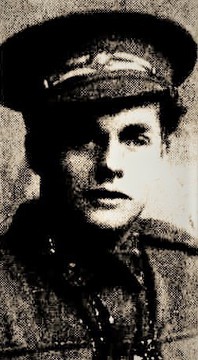
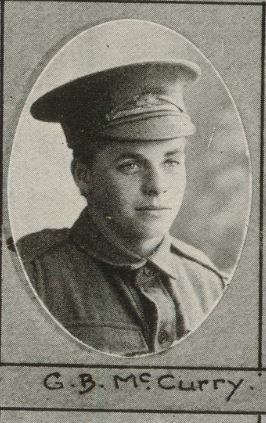
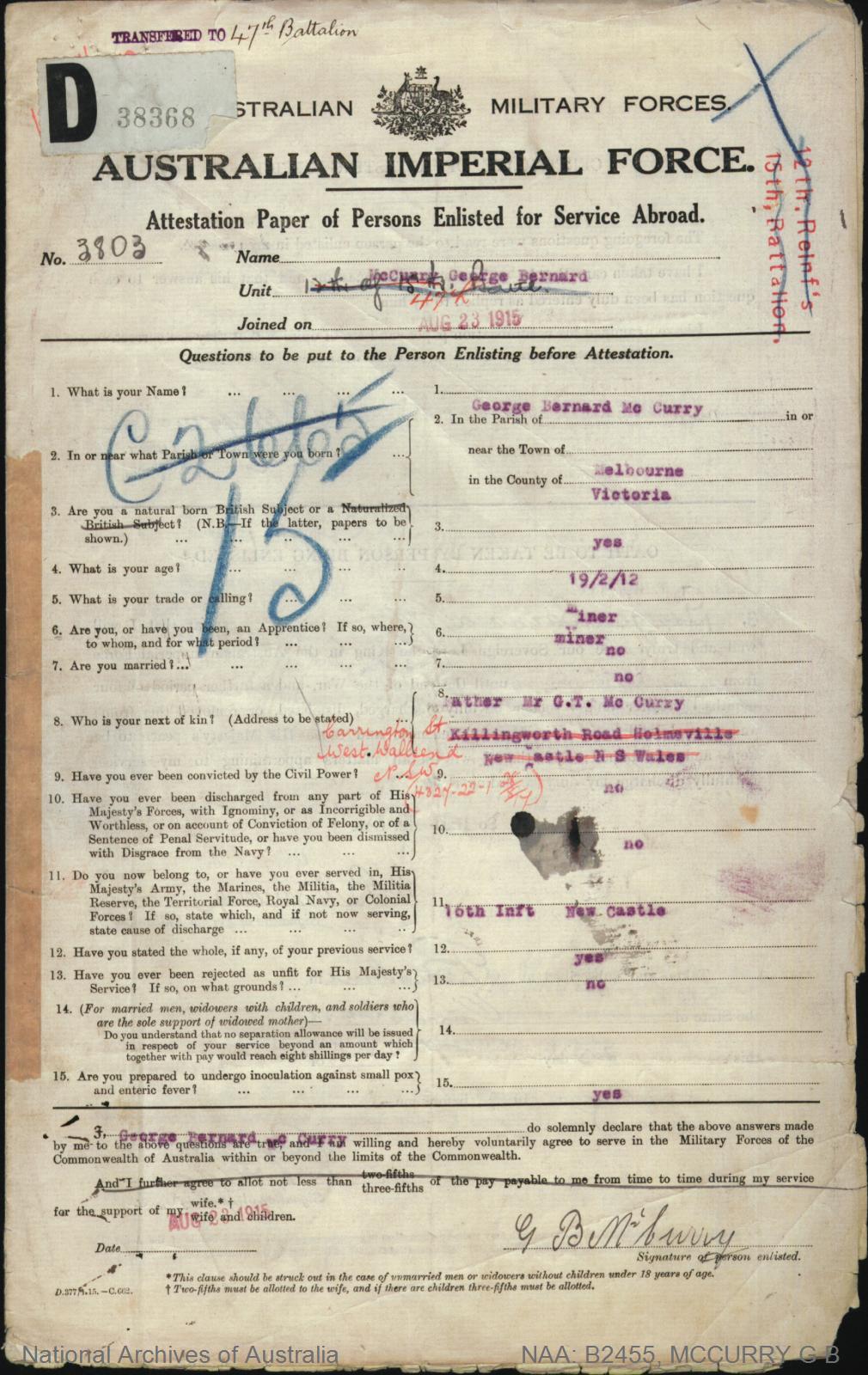
No. 38-3 Private George B McCurry, formerly 1st Reinforcements of the 47th Battalion, enlisted in Queensland. Reported officially missing on April 11, 1917. Any soldier who can give any information of Private George B. McCurry is asked to communicate with Chaplain Canon Garland, Anzac Club, Brisbane.
The above notice appeared in the Brisbane Courier on 27 August 1917. On 11 April 1917, several Australian units joined the 5th British Army in a poorly planned attack at Bullecourt. According to the Australian War Memorial, 3000 members of the AIF killed or wounded for no gain. McCurry disappeared that day as the Australians were forced back. Another 7000 Australian died in the second attack at Bullecourt in early May. A Court of Enquiry which held “In The Field” in November gave the verdict that McCurry had been killed in action.
The only evidence in McCurry’s records from any official investigation is the written testimony of Corporal Barncott, also of the 47th Battalion. Barncott swore that, while he did not see McCurry killed, he had subsequently been told this is what happened by those who witnessed it. The impetus for the investigation came from the family. Ten days after the attack, a member of the 47th Battalion, N. Lagutin, wrote the following to McCurry’s father:
I am very sorry I send you bad news. Your son George was killed in action on attack Bullencourt Village, North of Baupaume, about 8 miles. He was killed by machine gun bullet, and never lived two minutes. I don’t know his wishes, but we get that order so quickly to move, and we get no time to do anything about private matters. To send you his photo which took off him. (sic)
McCurry’s death was also reported in the Newcastle Morning Herald and Miners’ Advocate on 3 July, when his fellow soldier, Signaller Alex Drysdale, wrote a short message. It is from this notice we know McCurry was known as Jum by his friends. The problem for McCurry’s family, as detailed in a letter from his mother Ida to the AIF, was that they had also heard a conflicting report that he had been taken prisoner, all the while the official AIF position was that he was missing. A series of letters back and forth led to an announcement of the investigation in October and the Court of Enquiry at which McCurry’s death was subsequently declared.
George ‘Jum’ McCurry hailed from West Wallsend in Newcastle. A miner, he appears to have been living in Ipswich when he enlisted in Brisbane in August 1915. McCurry played for St Stephens in the Ipswich and West Moreton competition in the months leading up to his enlistment. In September he was denied leave from the base to play for St Stephens, though fellow players, Privates John Callon, Peter Spence and William McLean, were able to make the trip. He is likely the J. McCurry who was listed to play for the Enoggera Base against Brisbane City in the preview in the Telegraph on 1 October. Strangely, the preview stated McCurry had come from the Ipswich City club and not St Stephens.
The post-game report in the Brisbane Courier on 4 October had two changes to the Enoggera line-up previously published, with St Stephens clubmate Spence now joining McCurry in the squad. The difference in the proposed and actual line-ups may explain why a Private McCurry was listed in the Enoggera Base side picked to play on 27 November, despite his unit being said to have departed for Europe from Sydney on the HMAT Suffolk three days later. Most of the players in the side were the same as the game in October, but there is no post-game report which confirms they all played. The names may have been given to the Brisbane Courier before the order to march out came through. With so few McCurrys enlisting across the war, and no others in Queensland, George ‘Jum’ McCurry, player for St Stephens, is the most likely candidate.