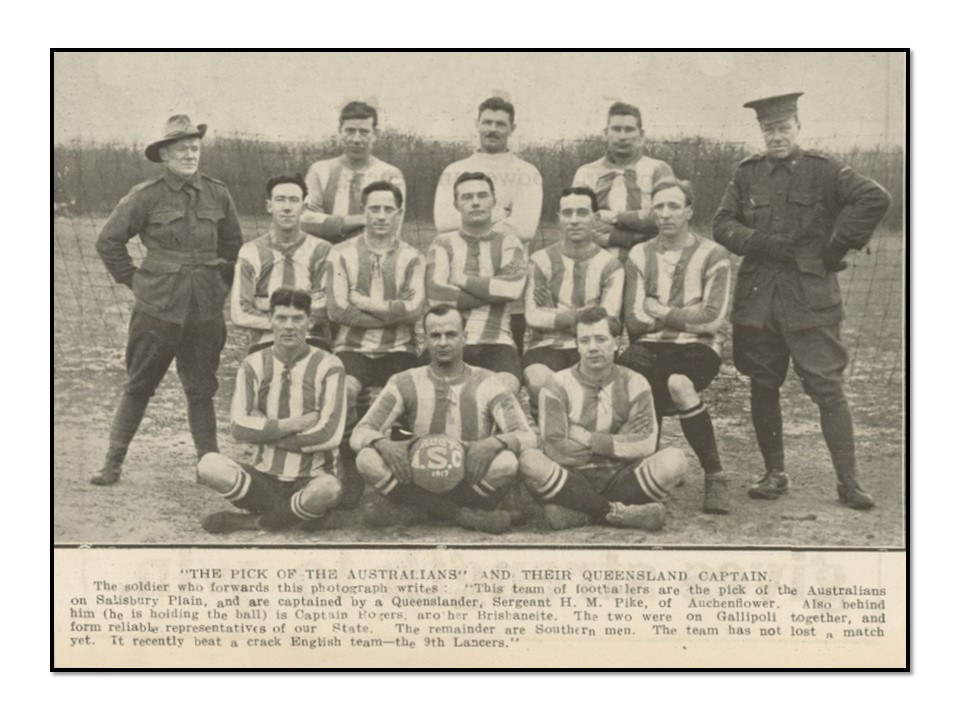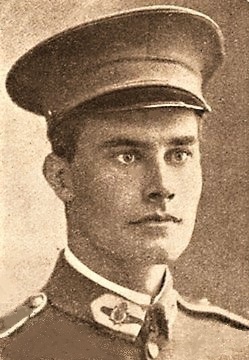
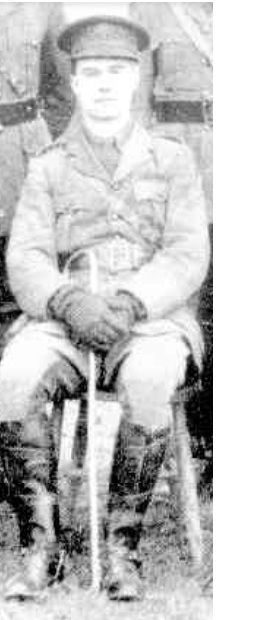
William Rogers was a Bundaberg accountant who played for the 5th Company Army Services Corp team at Salisbury Plain, one of two Queenslanders in the team, alongside captain Harold Pike. Such was the team’s success against British opposition, their photo appeared in The Queenslander of 7 April 1917 under the title “The Pick of The Australians and Their Queensland Captain”. The accompanying caption stated:
The soldier who forwards this photo writes: ‘This team of footballers are the pick of the Australians on Salisbury Plain, and are captained by a Queenslander, Sergeant H. M. Pike, of Auchenflower. Also behind him (he is holding the ball) is Captain Rogers, another Brisbanite. The two were on Gallipoli together, and form reliable representatives of our State. The remainder are Southern men. The team has not lost a match yet. It recently beat a crack English team – the 9th Lancers.
Rogers had been born in Lucknow, East Indies, but his pre-war military experience shows he had been living in Australia for several years before the war. He worked for Bundaberg Hardware Co as an accountant, and it appears his military, organisational and finance skills led him to hold logistics roles during the war.
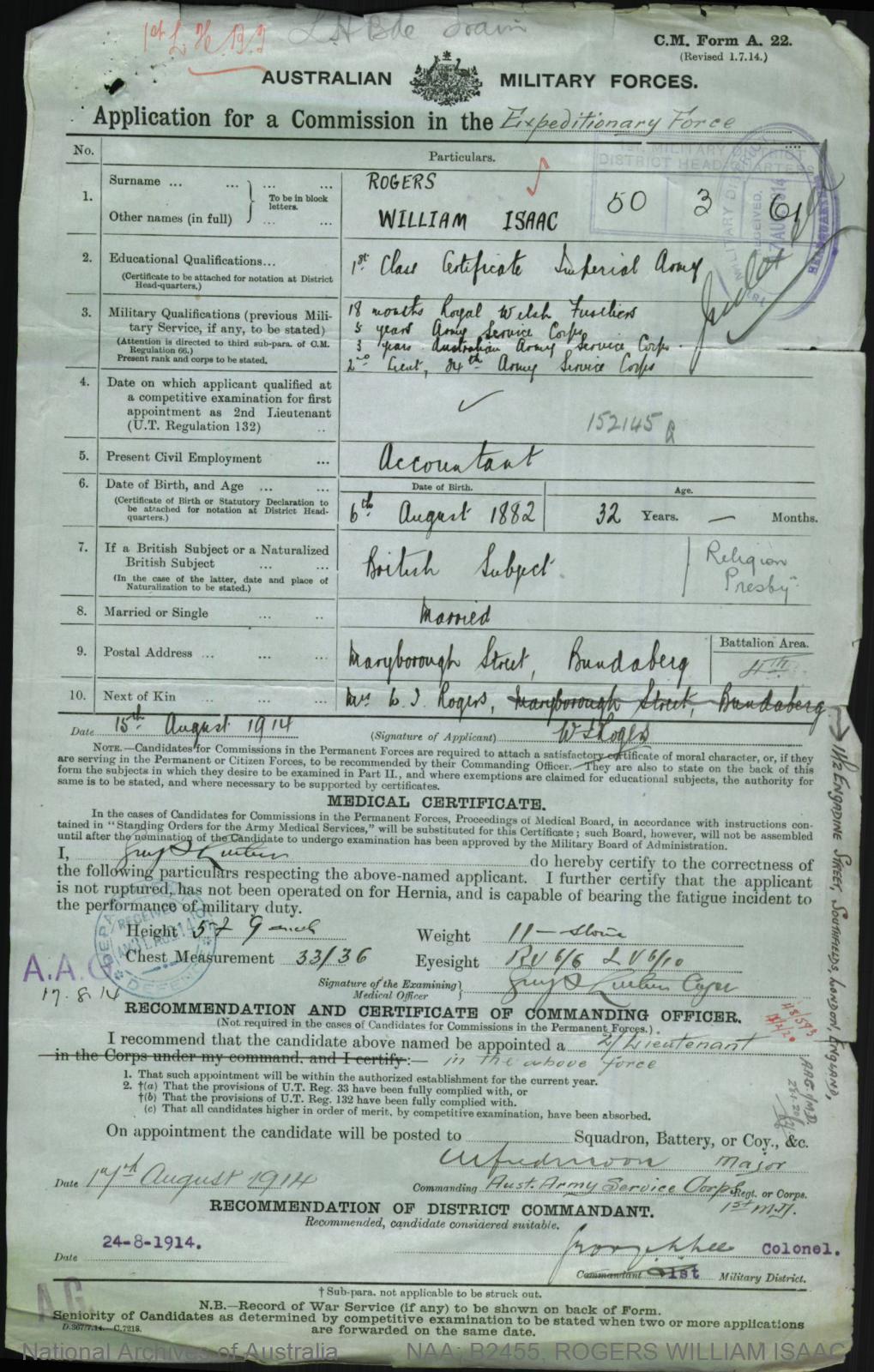
Rogers applied for a commission in August 1914, aged 32. He had previous experience with the Royal Watch Fusiliers and the Australian Army Service Corp, where he rose to the rank of 2nd Lieutenant. He was commissioned at the same rank by the AIF. Promoted to 1st Lieutenant in early 1915, he was allocated to the Division 1 Train, a unit responsible for providing food, water and ammunition to that division’s units.
He arrived in Gallipoli in August but was sent back to Egypt in November. Rogers was promoted to Captain in early 1916 and joined the Australian Army Service Corp in England for training, where he also played for the unit’s soccer team.
Rogers’ training continued into late 1917, qualifying as an Instructor at the Southern Command Gas School. His records hint he obtained skills in anti-gas measures. He finally reached France in October where he was transferred to the 4th Battalion Division 1 Train. Not much more was heard of Rogers in his records until he was granted 75 days leave immediately after armistice. He spent the rest of his commission holding positions at the depot at Sutton Veny.
Rogers applied to be discharged in Scotland rather than Australia. His stated reason was wishing to be with his aging parents and having “neither dependents nor interests in Australia.” Though he was married to Florence Hore at the time of his commission, she had moved from Bundaberg to Southfields in London during the war. However, her address as next of kin had not been updated with Base Records in Melbourne, leading to letters returning to sender, and a subsequent search for her whereabouts.
Much paperwork was required to allow Rogers to discharge in England, including a letter from the bank stating he had sufficient funds to not be a burden on the state. A final medical report was also required. Rogers was successfully demobilised in January 1920.
Rogers and Florence never returned to Australia. William Isaac Rogers died on 22/07/1957 at Westerby on Trym, Bristol leaving £522 14s 9d to Florence in his will.