


John Love was a Queensland representative player and elder brother of future Socceroo James Love. The brothers emigrated to Australia in 1914 to join another brother William. All three played for Brisbane’s Queen’s Park soccer club in 1915.
Love, a centre back, played well enough to be selected for the 1915 Queensland side to tour New South Wales. He played all three games of the shortened tour, as Queensland lost to Northern NSW (1-2) and beat South Coast (4-1) in the tour matches. The only official interstate match saw New South Wales defeat Queensland 4-2.
Senior division club football in Brisbane was cancelled in 1916. Instead, Love joined a Brisbane select squad which played up to 6 games against the Chermside Signallers Depot across the middle of the year.
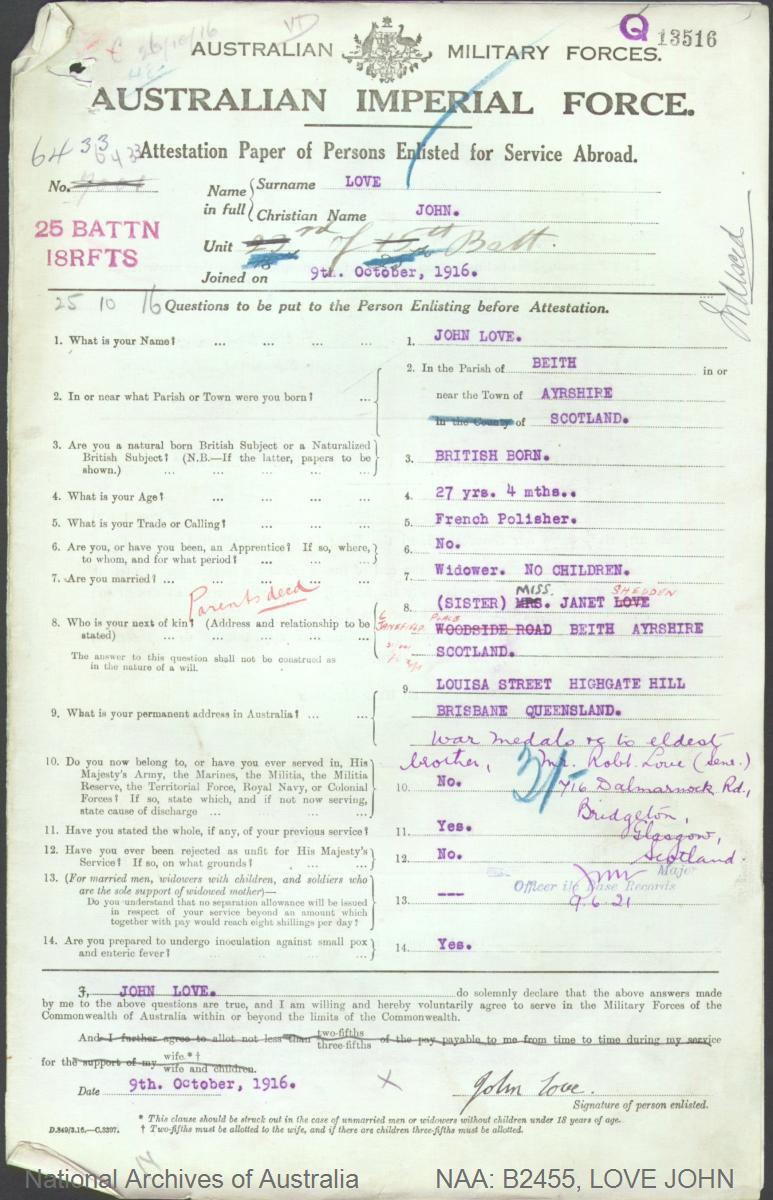
Love and his brother James enlisted together in October 1916. He was allocated to the 25th Battalion and departed Australia in December. Love arrived in France in June 1917. By October he was in Belgium, where he suffered a gunshot wound to the head a day after the Battle of Broodseinde. Love was evacuated to hospital but died 10 days later.
After being informed of Love’s death, brother William wrote to Base Records asking for a copy of his will. William, the only brother remaining in Brisbane, wanted to know what to do with Love’s personal effects, which he had in his care. Base Records could not find a will among Love’s records, and it is unsure what actions William took. It appears the items Love had in Europe were sent to the next of kin listed on his enlistment form, his sister Janet, who lived in Scotland.
Janet, though, was not eligible for Love’s medals, which were released to dead soldiers’ families after the war. The “Deceased Soldiers Estates Act 1918” dictated the order in which relations were eligible to receive the medals of deceased soldiers. Love had been a widower when he enlisted, and had no children. His parents would have been next in line, but both had died before he emigrated to Australia. Next came the oldest brother.
In 1921, William wrote to the Base Records Office confirming that while he was the eldest brother remaining in Queensland, an older brother again, Robert, had resided in Glasgow. It appears the medals were sent to Robert.