
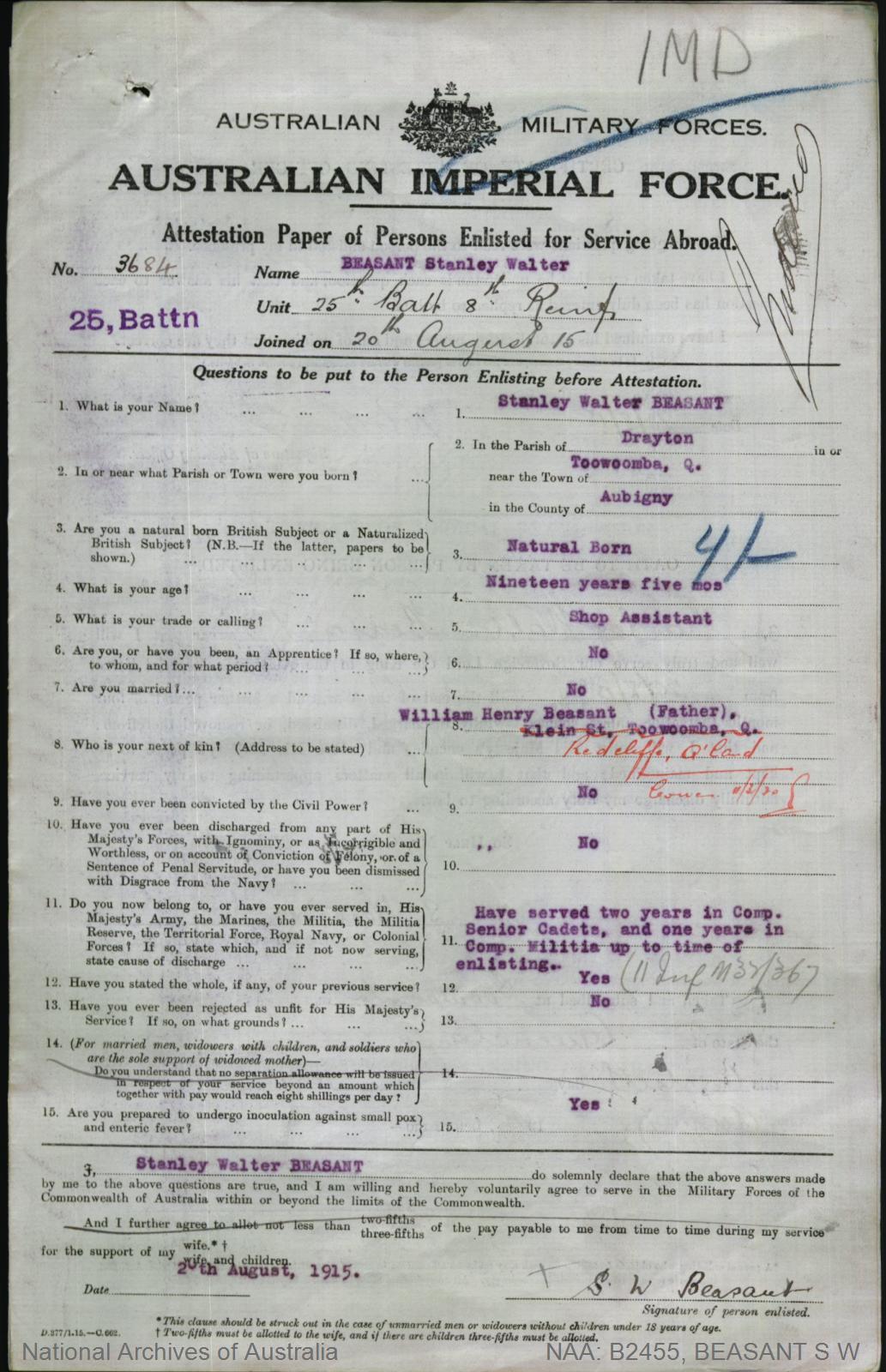
Stanley Beasant was killed in action on the 5th of August 1916, only two months after reaching France to join the 25th Battalion. He was officially classed as missing for the next year, until a Court of Enquiry in July 1917 confirmed he had been killed in action. The enquiry stemmed from a chain of letters beginning with a friend of Beasant in the 25th Battalion. This friend had been seeking news on Beasant and had found a witness who had themselves lost vision in one eye and the use of one arm. The witness stated Beasant had been hit in the chest and died instantly. The soldier wrote a letter to his brother, also in the forces, who sent their own letter relaying the news back to Toowoomba. Here the news came to the attention of L. E. Groom, local MP and a minister in the Australian Government at various times during the war. Groom appears to have written to the AIF Records Office in Melbourne to get a certificate of death issued on behalf of the Beasant family. The records office responded to ask for the name and details of the original witness so that they could be questioned as part of an official enquiry. Afterwards, when Beasant’s father wrote to Base Records in appreciation of finally receiving the death certificate, he mentioned the family had since spoken to a returned soldier who had also witnessed the death.
Beasant was a local soccer player whose name was added to the Toowoomba British Football Association honour board.