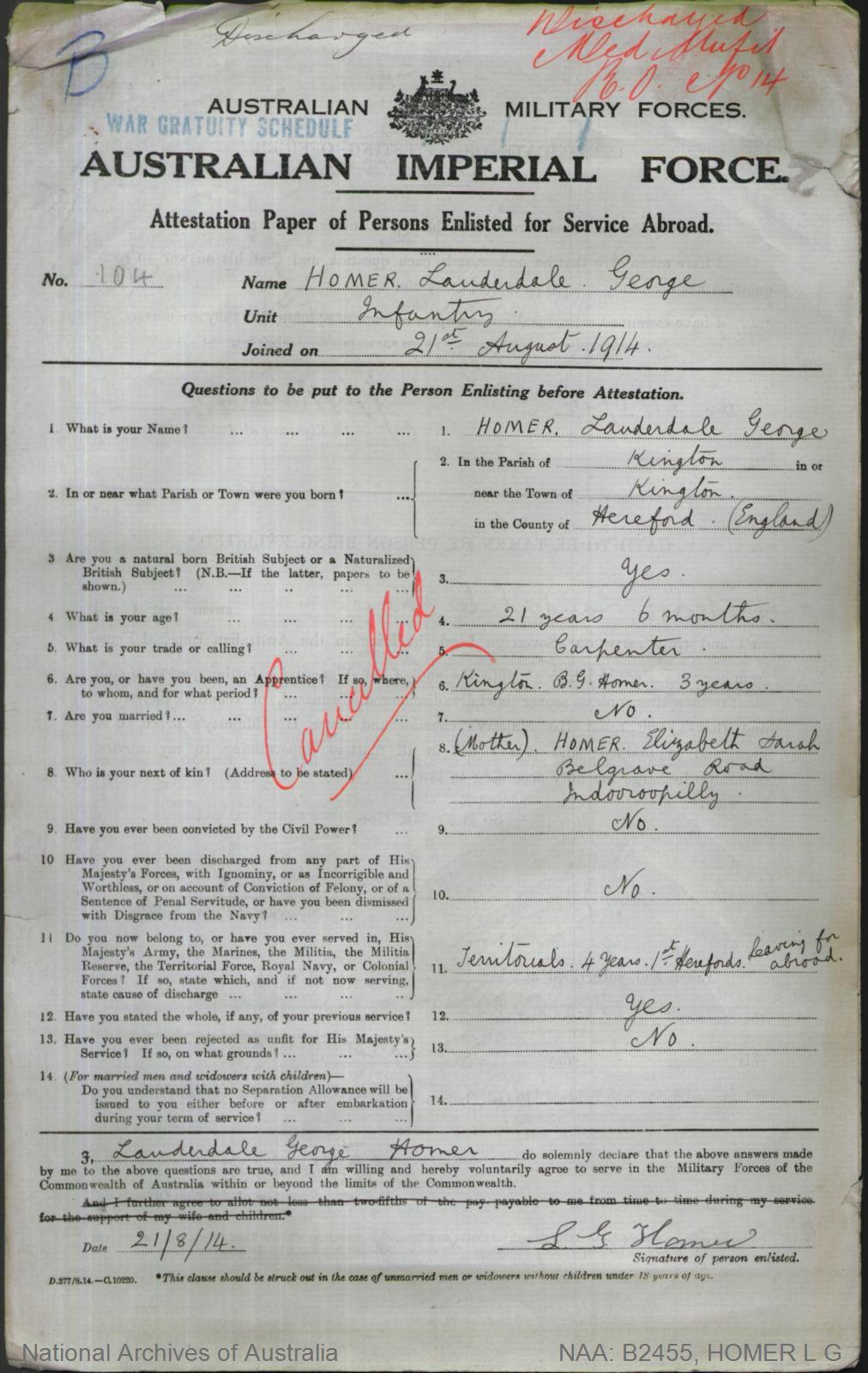
Lauderdale George Homer enlisted on 21 August 1914 aged 21. He was discharged on 3 September. His military record states he was medically unfit without giving details.
In 1915 he was noted playing soccer for Brisbane club Wellingtons. It is likely Homer played in previous seasons despite not appearing in newspapers as doing so, as neither did his brother, a known player. The Brisbane Courier on 29 November 1914 reported the death of Homer’s brother Henry who was stated as being a “keen ‘Soccer’ football player.
Yet the footballing careers of the brothers are unclear prior to their enlistments as newspapers only printed scores and not line-ups for most of Brisbane’s 60-odd soccer teams. Homer’s war, though, was not over. The Telegraph of 14 November 1916 listed Homer as appearing before the Exemption Court. It appears Homer was caught up in the existing Defence Act which allowed men to be called up for service in Australia, and liable for six months imprisonment if they did not do so. Conscription to fight overseas was not legal, though plebiscites to change this would occur. There was, however, nothing illegal in enforcing men to train in Australia. This became the government’s policy, with the expectation conscription would pass. This caused great resentment, as it would impact livelihoods. The Exemption Courts allowed exemptions under the Defence Act in cases such as religious belief, their existing work was best for the national interest to continue or being an only son.
Homer was given an exemption due to a clause stating one could be given if half or more sons in a family had already enlisted. In Homer’s case, three of six brothers had enlisted, including the late Henry. In the end, conscription was defeated at the ballot box in October 1916 and December 1917.