
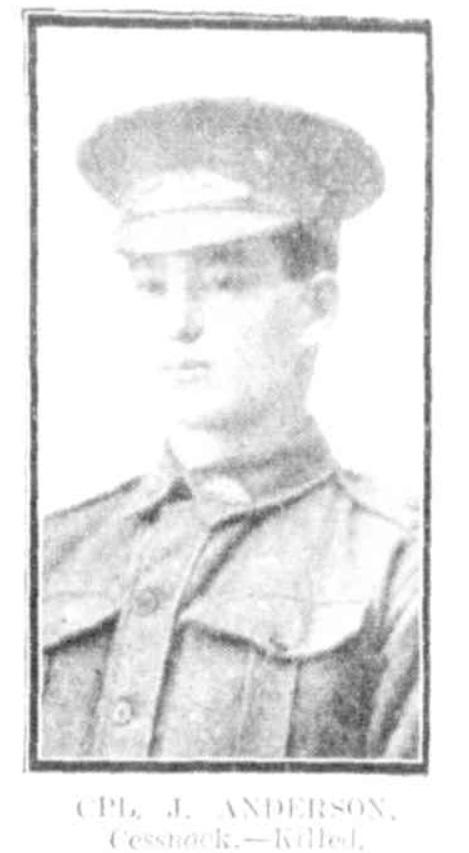
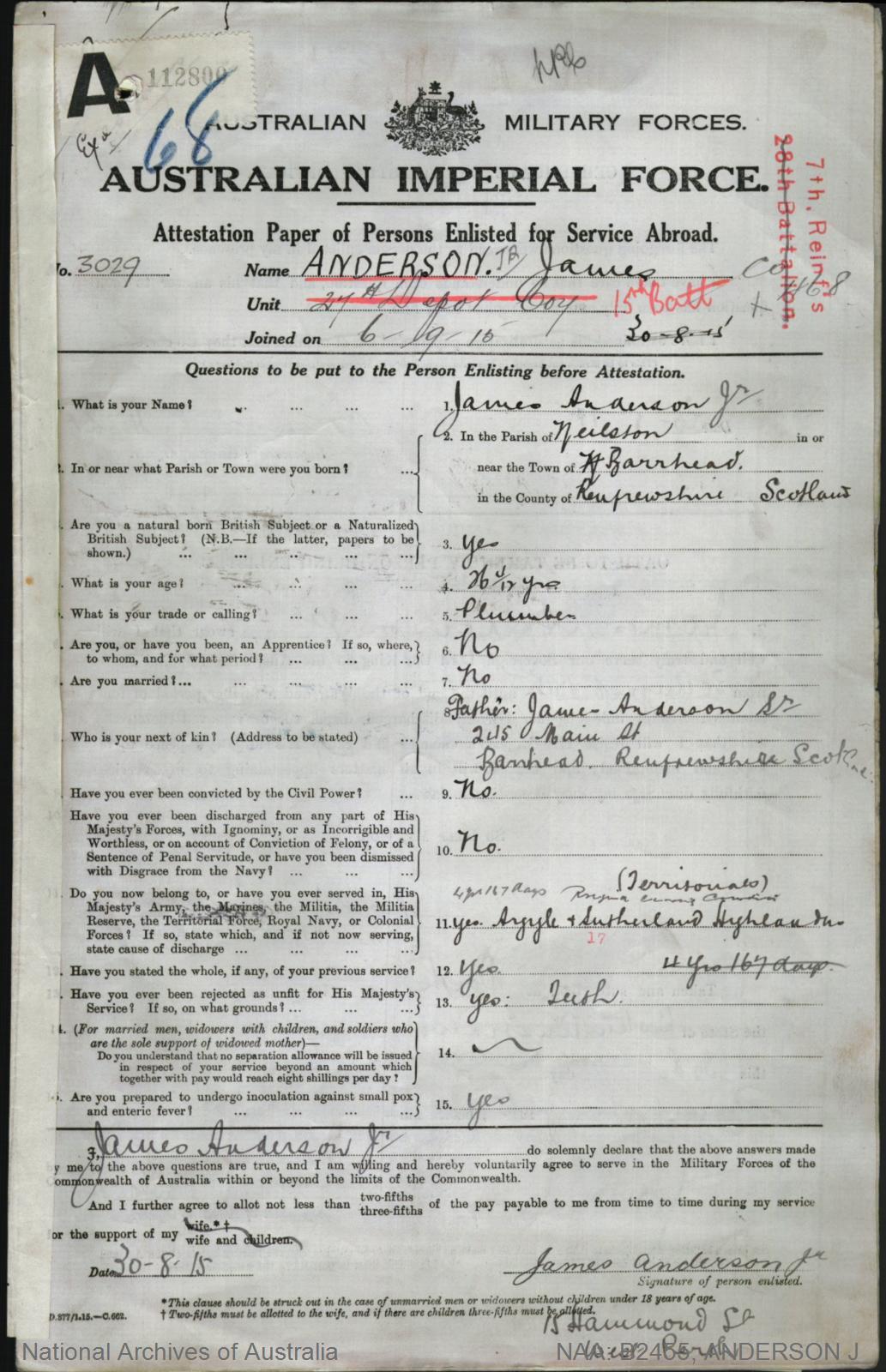
On 24 May 1917, the Newcastle Morning Herald published the following:
CESSNOCK. A BRAVE MAN’S DEATH. Private Thomas Colquhoun, of Cessnock, in a letter written to the parents of the late Corporal John Anderson (his mate) says “As I know you are anxious to hear some news regarding poor Jock’s unfortunate death, I deem it my duty, as one who was his constant companion, and also being intimately acquainted with the rest of his family, to write and give you a detailed account of the sad affair, so far as I know. On the night of March 1st, Jock was writing letters in the trenches, and was just going to have a few hours rest before going on duty again. He was proceeding down to his dug-out in company with his mate, when they heard an enemy shell whizzing through the alr. They at once lay flat down on the deck boards, but the shell exploded within a few feet of Jock, and he received severe injuries, from which he died the following morning, March 2nd. Only a few nights previous I had tea with Jock, and I can well remember his cheery smile, and how we wished each other the best of luck, with the usual advice to be careful as we parted. The whole of his comrades were wonderfully impressed with his grand spirlt, and with the fortitude with which he bore his injuries. On the way to the dressing station he even sang ‘Nearer, my God, to Thee,’ and other favourite hymns, while on the stretcher. He was quite conscious up to the last few, minutes, and his last words were, ‘Tell them at home that I did my duty. I’m not afraid to die. And tell them I died quite happy.’ Which goes to show that he died as he lived, a good, God-fearing man, and a soldier ever inch. We are attending to Jock’s grave.”
Corporal Anderson died at the age of 22. The shell shattered his legs, right arm, right side and face. Thomas Colquhoun was a Cessnock teammate who survived the war. So did John’s brother, another Cessnock footballer, Alexander Anderson, who returned home with the Medaille Militaire.