
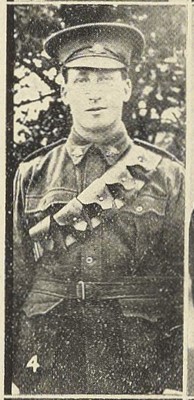
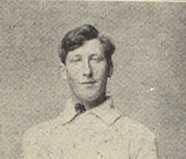
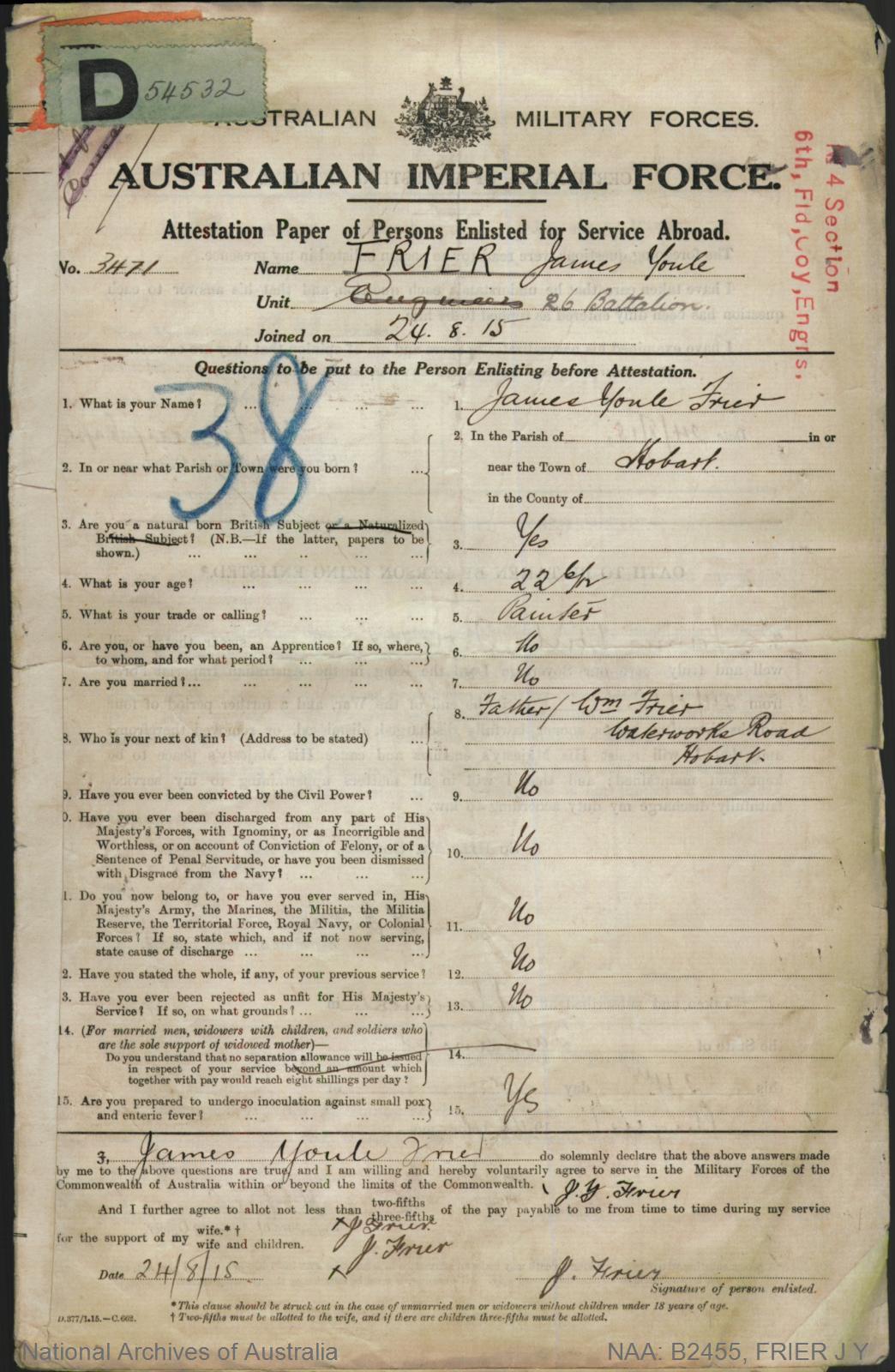
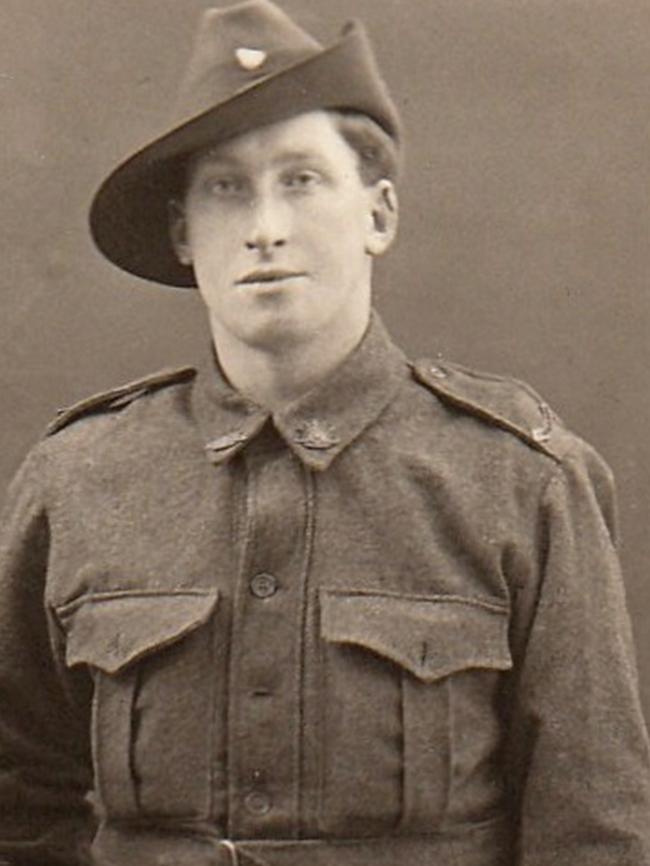
James Youle Frier was born in Hobart on the 8th February 1895, a son of William and Jemima Frier. The family lived in Waterworks Road, close to Hobart and James educated at the Hobart state school.
In 1911, James joined the South Hobart club, playing in defence for the ‘B’ team in his first season. By 1912, he had moved positions to goalkeeper and became a member of the committee. Having cemented his place as the team’s no.1 goalkeeper, James was on the cusp of achieving representative honours during this period. He was named as the reserve for both Southern Tasmania and Tasmania in representative matches in 1914, playing second fiddle to fellow soccer anzac Walter Benson for both matches. Frier continued to play throughout the 1915 season after war broke out, with South Hobart the runaway leaders this season. After the season was declared null and void in early August 1915, James enlisted on the 24th of August.
He departed with the rest of his unit, the 6th field company engineers, aboard the Ceramic on 24 November 1915. This unit comprised soldiers from across Australia, whose primary employment prior to enlisting was in a trade, with James working as a painter in Hobart. James received a gunshot wound to the scalp at the Battle of Pozieres in July 1916. He was sent to England for recovery and was the re-hospitalised for a hernia injury. He was then transferred to the 26th Battalion in September 1917 and saw action in the Third Ypres campaign as well as continued action on the Western Front throughout 1918.
James was reported missing in action in Tasmanian newspapers in July 1918. Confirmation of James’ death was published in papers in December 1918, stating that James was killed in action on the 28th of May 1918. A court of enquiry was established to discover James’ whereabouts. Numerous soldiers gave evidence, with Capt. Francis Claude Lloyd describing the action:
Frier. J.Y. was one of a patrol on the night of 28.5.18, whose duty was to find out the location of enemy outposts. The patrol came suddenly on an enemy post and a bombing fight resulted. All the patrol with the exception of the above mentioned man returned to our line several of them wounded.
The patrol was at Dernancour near the railway at Ville-Sur-Ancre. Pte Edwin Arnold described in detail the circumstances surrounding giving the most graphic detail of James’ demise:
Whilst on a wiring party, he was shot through the neck by M.G. [Machine Gun] bullet and died shortly after and buried in cemetery near Albert – Amiens Road.
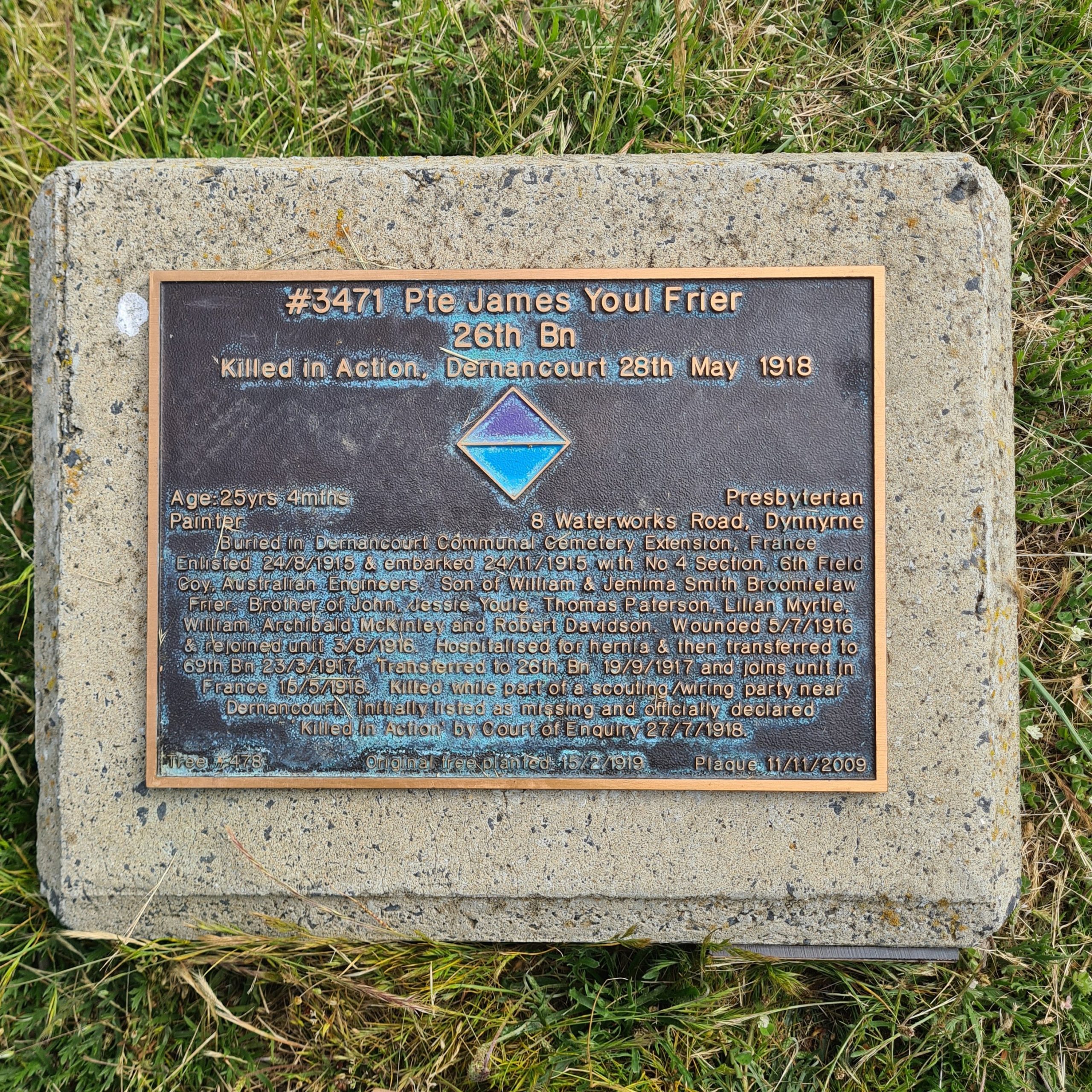
James Youle Frier is buried at the Dernancourt Cemetery in France, while his services to the country are honoured at the Australian War Memorial, the Roll of Honour at Hobart’s Town Hall and on the Soldiers’ Memorial Avenue (tree 478) on the Queen’s Domain, Hobart.