

On 11 May 1917, the Queensland Times long-standing sports writer Tom ‘Old Sport’ Barker listed a number of local footballers of all codes who had been recently killed in the war. It was a subject Barker touched on often during the conflict, having had social connections with many Ipswich sporting families for so long that he had watched many of the soldiers’ parents play in their youth. He soon became President of the Navy and Army Veterans’ Association and became heavily involved in repatriation work.
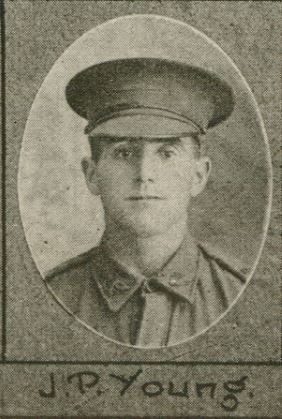
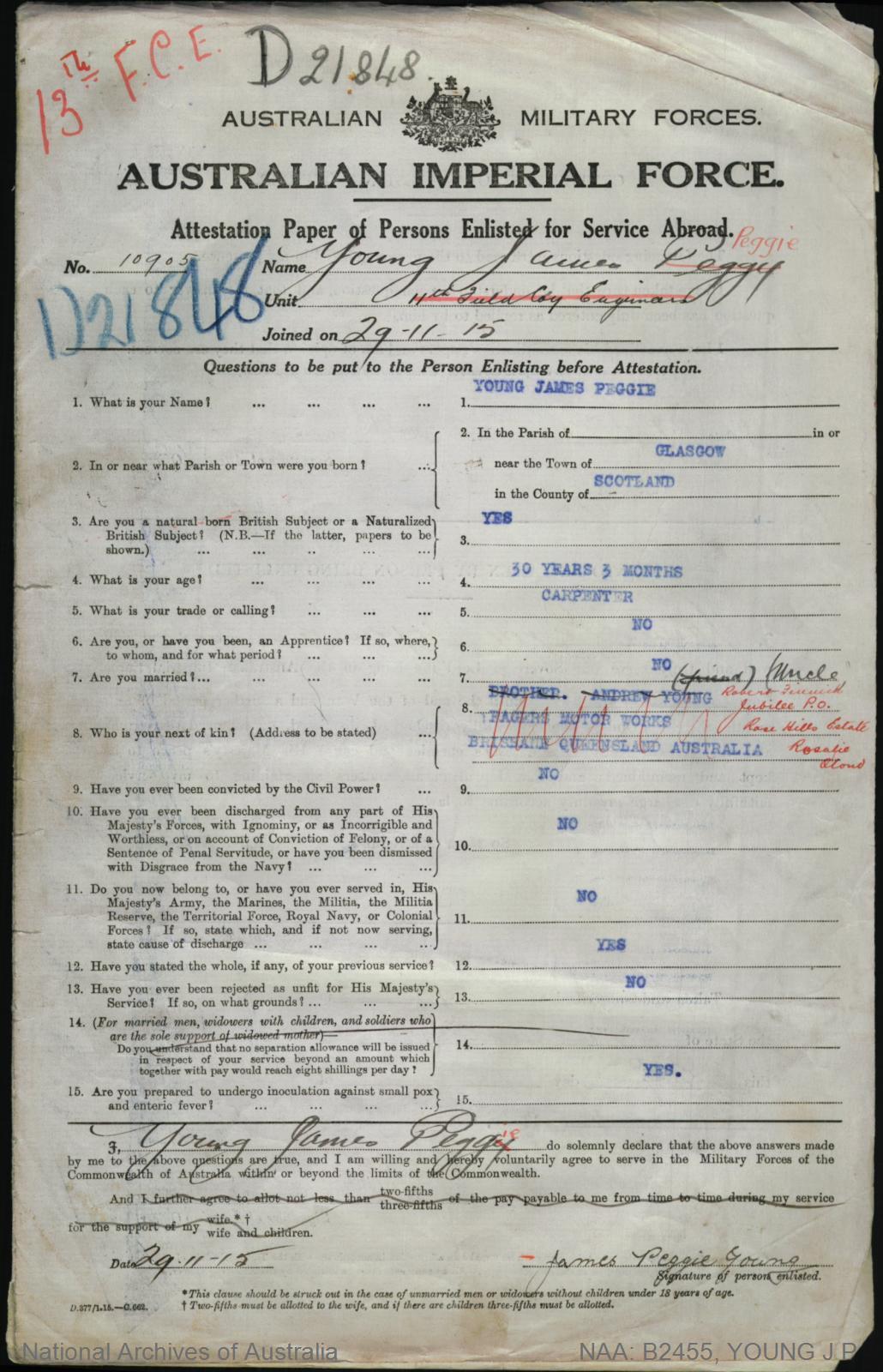
But those on the Barker’s list that day would not become repatriated. Among them was Jimmy Young. Young had enlisted in November 1915. At the time he was working as a carpenter but had previously worked for the North Ipswich railway workshops. During that period Young played for the Ipswich Railway soccer team, and in 1912 captained the Ipswich and West Moreton representative team which defeated the touring New South Wales side 4-2.
Young’s soccer career seems to have wound down by the time he enlisted at the age of 30. He would not reach France until August 1916 following a period of training. His early record of active service is merely filled with minor administrative details until his death. Young died on 31 March 1917 from wounds sustained to the head and legs. He had been caught in a mine explosion in a well and died later that day despite the best efforts of the 13th Field Ambulance. The war diary of his unit, the 13th Field Company Engineers, states that teams had been repairing pumped wells in the area of Bapaume on the day Young and 9 others died as a result of the explosion.
Young’s death generated a lot of paperwork. His grave had to be photographed, and the location recorded. A death certificate was sought variously by the Pay Department of the Victoria Barracks in Brisbane, Young’s solicitor, Queensland’s Public Curator’s Office and the United Ancient Order of Druids, the last to allow that lodge to pay out funeral money to the next of kin. The matter of who received Young’s war medals also had to be settled. Young’s brother Andrew was the original next-of-kin on his enlistment papers, but when Andrew himself enlisted the next of kin was changed to their uncle.
After the war Andrew wrote to the Base Records Office requesting the medals due to the fact he was the only surviving brother. There was also work for the newspapers, and in the Queensland Times, Young had a newspaper close to its local community. He was given a short obituary on 24 April, which briefly mentioned soccer career, and that he was the first of the local Order of Druids to die in the war. Tom Barker on 27 April wrote that Young was
one of the smartest exponents of the ‘soccer’ that we had in the Ipswich district for many seasons. He died as a soldier somewhere in France. He will be remembered as having captained a West Moreton team of British Association footies against a New South Wales combination, between four and five years ago. His side won, ‘Jimmy’ having that occasion excelled himself as a centre forward player . . . ‘Jimmy’ Young’s death will be much regretted. He resided at Woodend for some time.
Several weeks later Barker mentioned Young again, alongside those locals of the other codes who had recently been killed in action, tying Young into the larger Ipswich sporting community. And with so many of the local sports community involved in the war, it was no wonder Barker, who had written about and lived among it for almost 30 years, soon became involved in soldier repatriation and veterans’ affairs.