
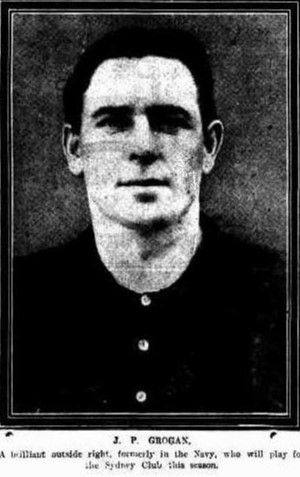
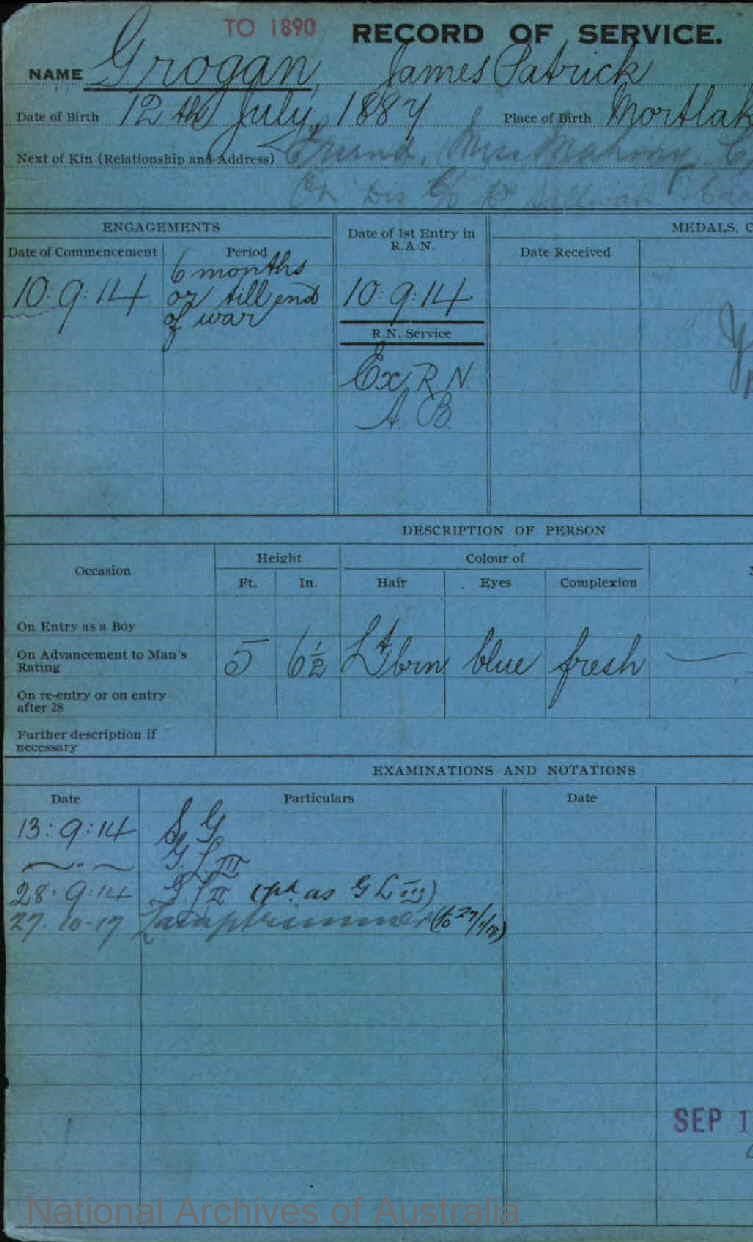
On the south bank of the Thames, roughly halfway between the home grounds of Brentford & Fulham football clubs in southwest London, sits the suburb of Mortlake. Into this district in July 1887, was born James Patrick Grogan, Patsy to his friends and fans alike.
Able Seaman Grogan found his way to Australia aboard the Royal Navy’s protected cruiser HMS Powerful. The Powerful had been assigned to Australian waters in 1905 and had become the centrepiece of the Royal Navy’s presence in Australian waters.
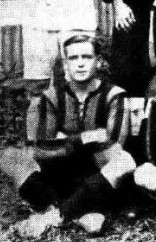
From within its complement of 799, Powerful was able to put together a more than decent football team and among its members was Patsy Grogan. The naval team first made its mark in 1910 when it defeated Helensburgh Thistle in the final of the Gardiner Cup, the premier piece of NSW footballing silverware in the day. Grogan played on the right wing.
Grogan finished his Royal Navy commission and stayed in Sydney, turning out for Balmain in 1911. In 1912 he moved to the Sydney club which reflected a change of address such was the way the Sydney competition was structured. His talents were recognised by the NSW selectors that year and he became a fixture in the sky blue forward line until the outbreak of war, playing ‘tests’ against Queensland, Victoria & Tasmania.
Joining the fledgling Australian Navy on September 10th, 1914, Able Seaman Grogan was assigned first to HMAS Penguin for basic training and then to HMAS Cerberus & HMAS Warrego, a ship tasked with neutralising the German colonies to our north.
Grogan then spent nearly a year aboard the Navy’s training ship HMAS Tingira before he was transferred to the sloop HMAS Fantome towards the end of 1917.
Demobilised in June of 1919, Patsy had returned to the football field a month earlier, turning out for the Cockatoo Island Dockyard team in the Sydney competition and making an instant impression. Clearly four years at sea had not dulled his skills.
His life post war saw the ‘flying winger’ working for the Australian Jockey Club as a racecourse detective protecting the public from pickpockets and other ‘riff raff’. Nothing is yet known of his family life but lived until 1979 and he is still regarded as one of the best pre-war players seen on the Sydney soccer scene with a right boot that was indeed, powerful.