
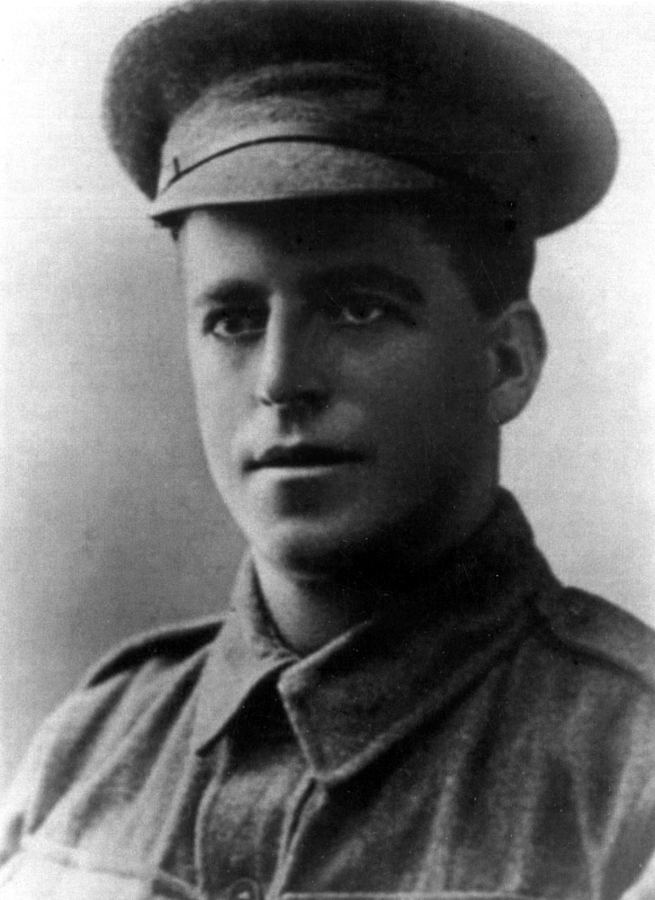
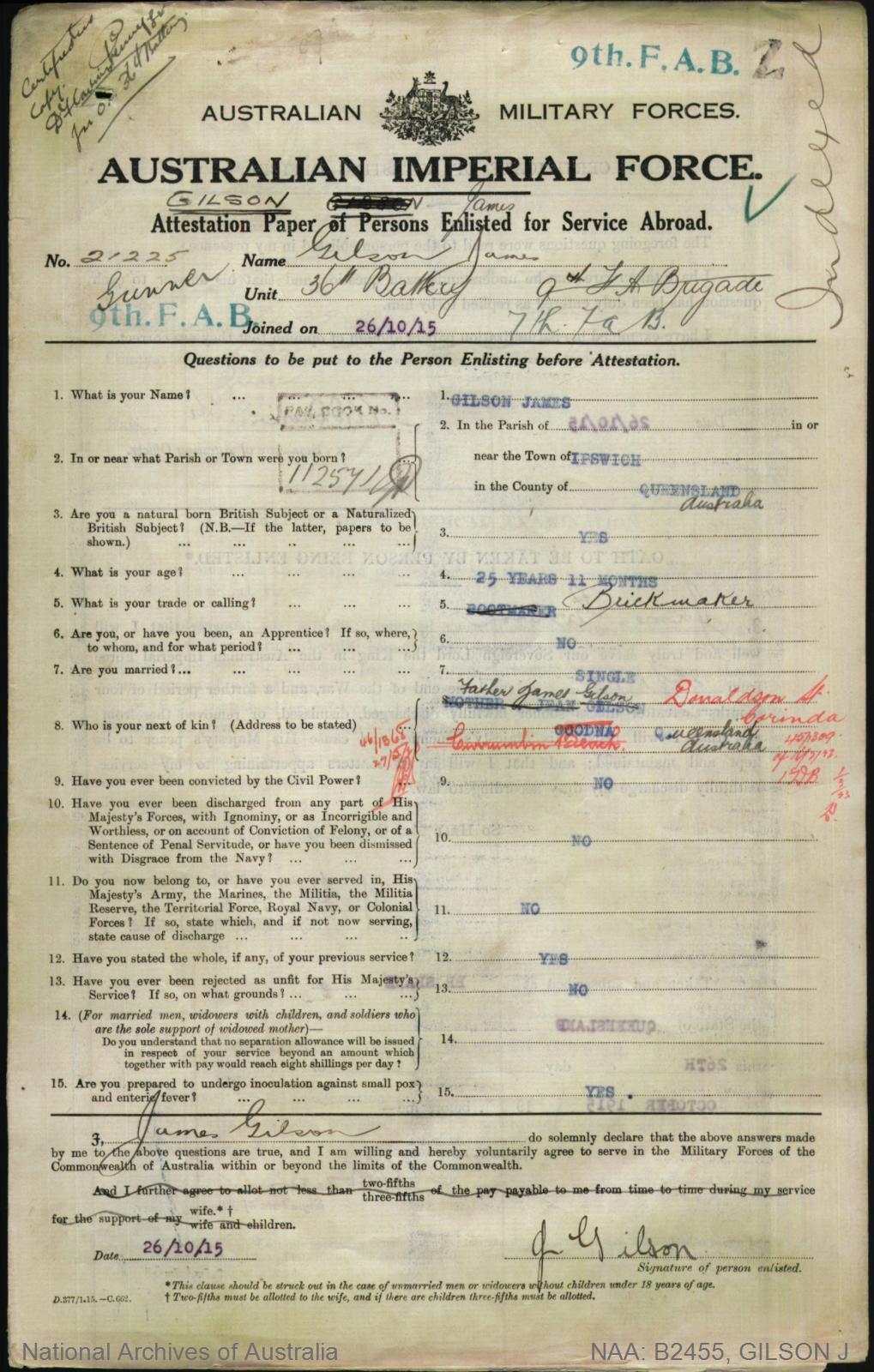
James Nicholas Gilson was killed in action in France exactly three weeks before armistice. At the time he was a member of the 7th Field Artillery Brigade who were fighting alongside the 27th United States Division. This meant that Gilson’s Brigade continue to fight after most Australian forces had been withdrawn following the breach of the Hindenburg Line in early October 1918.
Five months before his death, Gilson was added to the Toowoomba British Football Association Honour Board alongside his brothers Frances and George, and step-brother Harry Younger, who all survived the war.
Gilson was born in Ipswich where he lived until his family moved to Kleinton, north of Toowoomba, in 1906. According to the Toowoomba Chronicle of 2 November 1906, Gilson’s father, also James, opened a new pottery works on one side of a new spur-line 13 miles north of Toowoomba. On the other side of the line stood the existing brick works of John Brazier. Brazier and James had previously worked together in Dinmore, while the Brazier family had been heavily involved in Dinmore Bush Rats soccer club. The two neighbours were soon involved in a new soccer club – Kleinton Rovers.
Gilson, brothers George and Francis, and step-brother Harry Younger all played for Kleinton Rovers between 1909 and 1911, while their father was on the committee. The next year most of the family returned to the Ipswich region. Before leaving the Toowoomba district the Gilson Cup was donated for the winners of the B-grade cup competition. According to the Toowoomba Chronicle of 21 June 1912, the cup was donated by James Gilson – likely Gilson’s namesake father. The Gilson Cup would last until the 1970s, having been periodically presented to the winners of various local competitions in the intervening decades.
Back in the Ipswich district, the Gilson family set up the Goodna Brick and Pipe Works. Here Gilson worked for his father and played for the Goodna club in the Ipswich and West Moreton league until his enlistment in October 1915.
Gilson reached England in August 1916 and left for France on New Year’s Day 1917. Originally a driver with the 9th Field Artillery Brigade, he was transferred to the 7th in July 1917. It appears the transfer was made at his own request. His record is otherwise empty until his death on 21 October 1918. Gilson was buried at St Souplet British Cemetery near Le Cateau.