

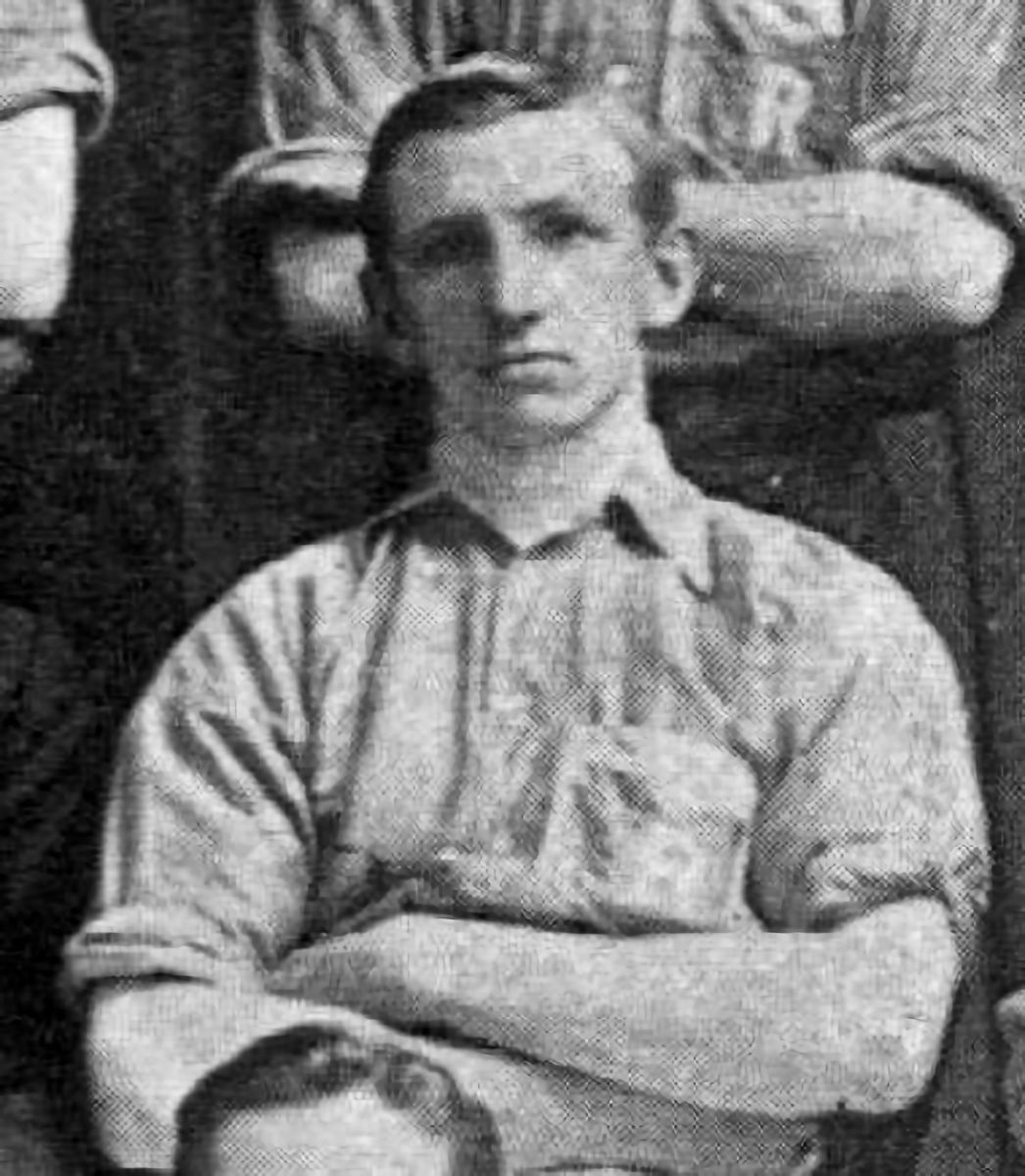
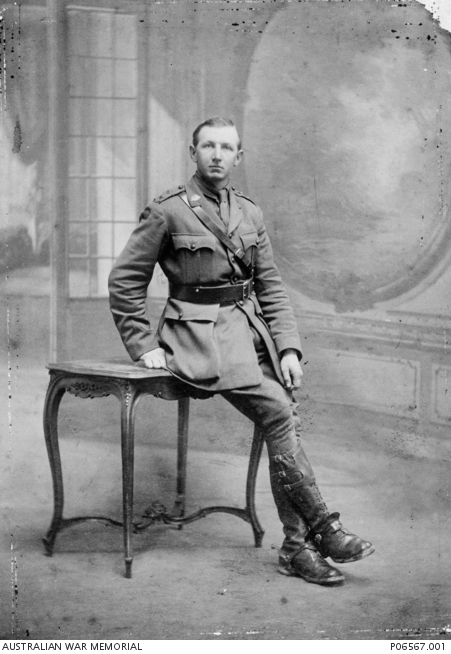
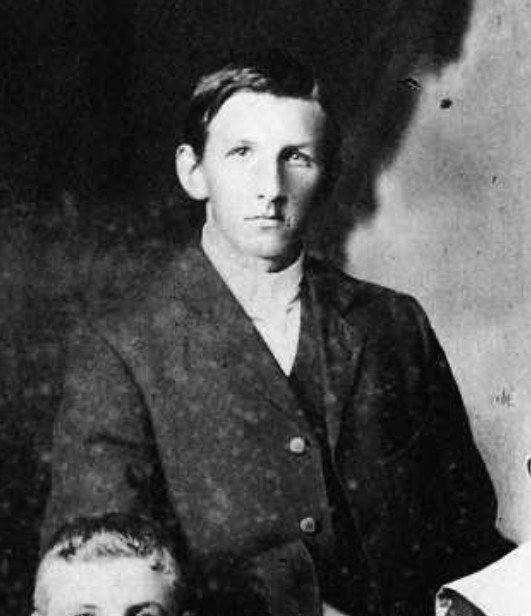
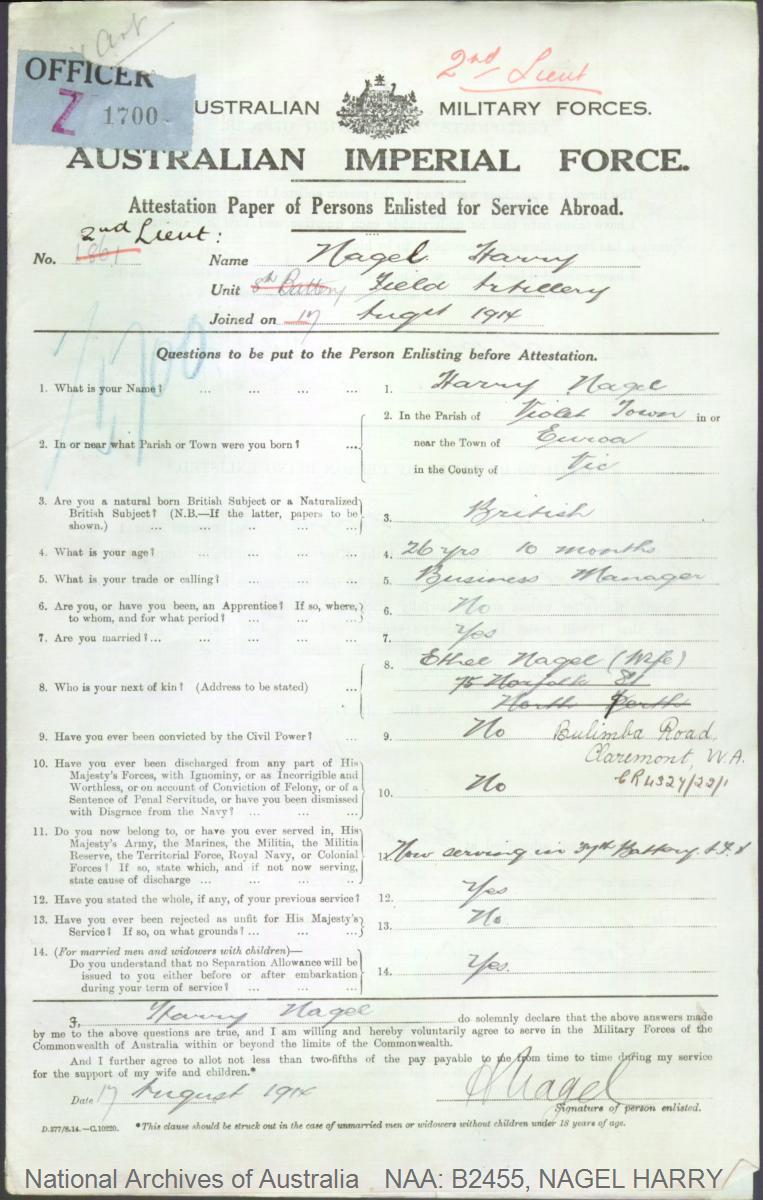
Harry Nagel was born in Violet Town, a small rural community in north eastern Victoria, on 13 October 1887. His parents, German migrant Johann Nagel and his wife Emily Barnes, moved their growing family to Albany on the south coast of Western Australia in late 1894.
Harry was educated at Christian Brothers College, a boarding school on St Georges Terrace in central Perth, where he learnt violin. It’s likely his introduction to football came via his eldest brother Walter, who in 1904 joined the Junior League club Rangers.
The following year Harry joined his brother on the football field, featuring as a full-back. After two seasons in the Junior League, he was promoted to the senior side where in 1908 he helped Rangers to victory in the Challenge Cup & Shield Final against City United. His playing days came to an end with the close of the following season.
Harry’s interest in the game also took him into its administration. After a couple of years as a Junior League delegate to the British Football League of WA, he was elected to the position of Secretary with the Junior British Football Association of WA in 1908. That year he also served as Secretary for this club.
By 1910 Harry was working as a clerk and living with Walter, a plumber, on Lincoln Street in North Perth. Three years later he married Ethel Symonds and soon after they welcomed a daughter, Enid, to their home on Norfolk Street, North Perth. Johann, Harry’s father passed away in May 1914.
Harry enlisted with the 3rd Field Artillery Brigade in August 1914, serving as a Quartermaster Sergeant. By the time he arrived at Gallipoli in October 1915 the campaign was in stalemate and a bitter winter had set in. Promoted to Battery Sergeant Major, Harry barely saw action before the order to evacuate the peninsula was given.
The reorganisation of the Australian Imperial Force in March 1916 resulted in Harry being promoted to 2nd Lieutenant with the newly formed 24th Field Artillery Brigade. His 20-year old brother Sidney had enlisted with the 1st Divisional Signal Company and the two brothers met up in Alexandria while awaiting deployment to the Western Front.
In June the 24th Field Artillery Brigade moved into the Somme Valley in France where they were involved in fighting around Pozieres and Mouquet Farm. Promoted to Lieutenant in August, his brigade pushed towards the Flers sector as the weather started to turn bad, with heavy rain and cloying mud hindering movement and operations.
Harry transferred to the 11th Field Artillery Brigade in January 1917 as the Germans withdrew to the Hindenburg Line. In the early stages of the Battle of Passchendaele, he suffered gun shot wounds to the left pectoral and deafness in the left ear and was evacuated to hospital in Le Havre, France. Harry’s actions earnt him a Mention in Despatches –
For sterling and invaluable services as Section Commander while in action at BULLECOURT, MESSINES-WYTSCHAETE and recent operations in the YPRES Sector 26/2/17-20/9/17. As an Artillery Observing Officer he has done extraordinarily well having always carried out his tasks regardless of risk and personal injury. This officer was wounded in the recent operations at YPRES whilst observing and registering for his Battery.
Harry was killed on 17 October, 1917, in Belgium “while returning along the duckboard walk from ZONNEBEKE to the battery position near KIT and KAT Ridge, was struck by a 5.9 Howitzer shell and killed instantly. His body was removed to the wagon lines and buried in Reningelst Military Cemetery” reads his service record.