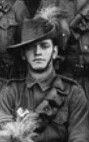
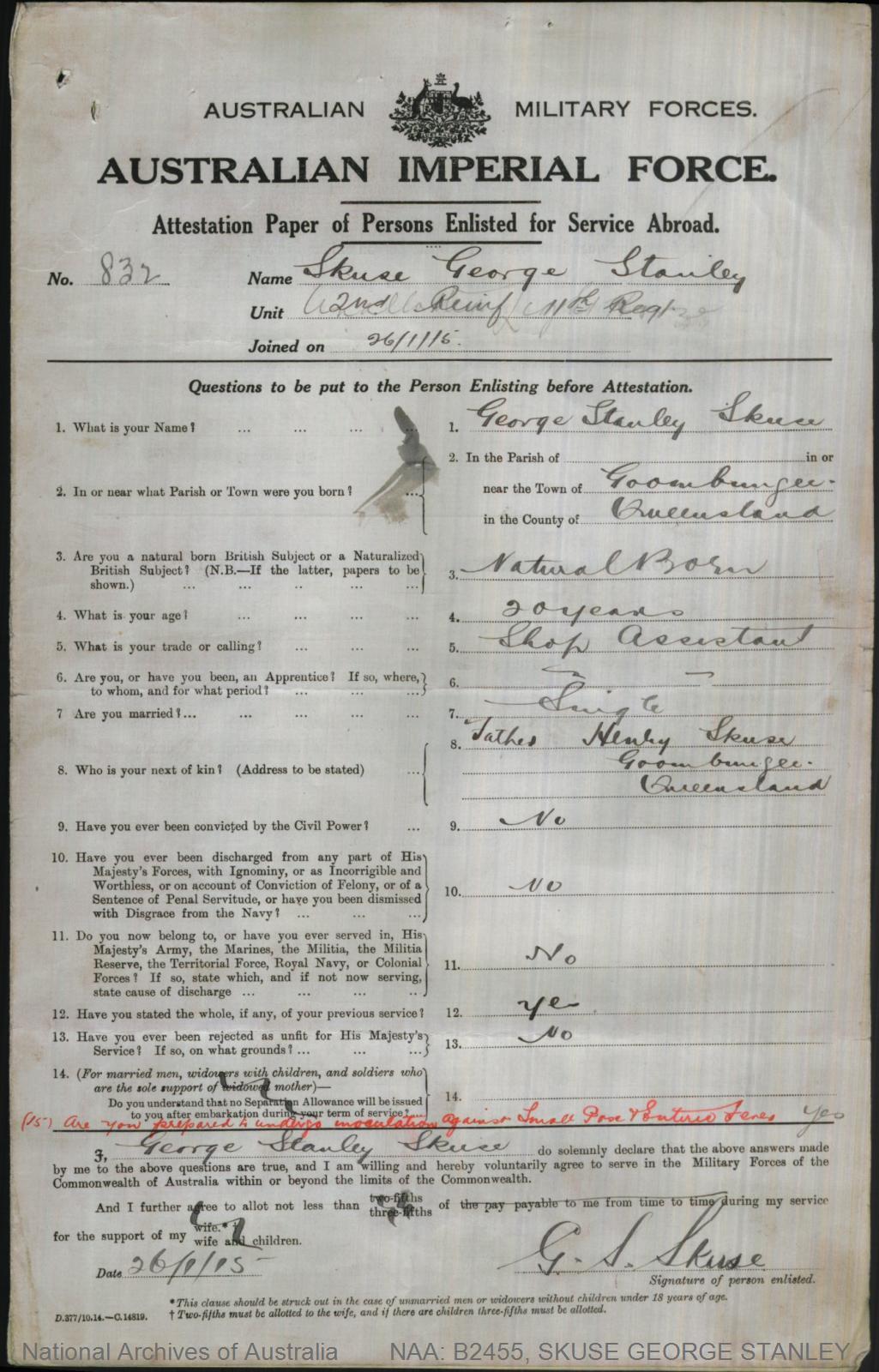
George Skuse was given a public send off when he departed for war in 1915, reportedly becoming the first to enlist from the village of Goombungee. Among the speakers were his father, a Crimean War veteran, who gave Skuse his full endorsement.
Over the next two years, Skuse was attached to the 4th Light Horse and 1st Australian Camel regiments before being discharged to join the Egyptian Camel Transport Corps. Approximately 170,000 men worked for the Egyptian Camel Transport Corps during the war, transporting supplies to troops in desert areas in Palestine and Syria.
Skuse survived the war, gaining the rank of Captain, and was welcomed back to Goombungee in 1919 with another official function.
Skuse, who played football for Goombungee earlier in the decade, incorrectly appeared on the Toowoomba British Football Association honour board as killed. This was likely James William Skuse, his brother, who was killed in action in 1916.
Skuse led a colourful life after the war, moving to Brisbane, being arrested for playing two-up, and regularly appearing in the society pages with his wife Alice due to their link with the local opera scene. Leading Australian mezzo-soprano Dorothea Deegan stayed with them on one occasion, while notable family birthdays and weddings were reported to have many guests.