

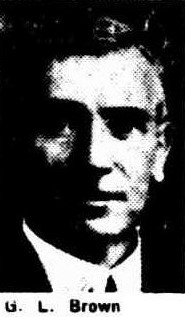
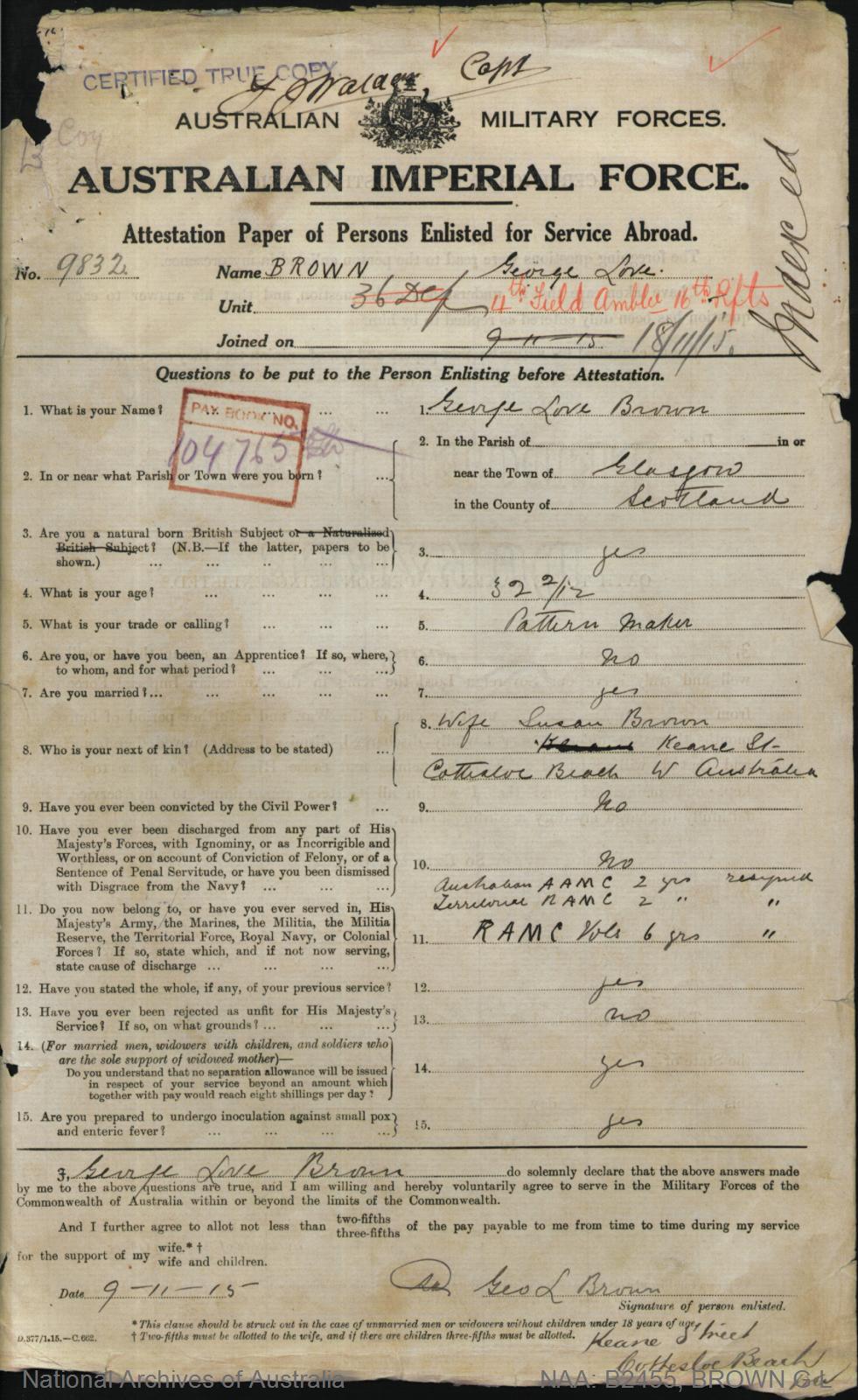
The West Australian on 23 July 1935 contained the following piece on Geordie Brown.
SOCCER: A FOUNDER OF CALEDONIANS. (BY ‘RIGHT-HALF.’)
ALTHOUGH the Caledonian Soccer Club has been well served by many capable and enthusiastic officials during the past 22 years, none has been more closely associated with the club than its founder, Mr. G. L. (‘Geordie’) Brown, the present chairman of the Buckland Hill Road Board.
Unlike the majority of Scotsmen who have settled in this State, Mr. Brown did not follow the pursuits of the football field in his native country. He made his first appearance in the sporting realm with Shetelstone Harriers, a noted Scottish Club which has made history on the track. A high standard of training was set for this club by its coach, Andy Robertson, whose reputation as a trainer was recognised throughout Scotland. The nightly use of cinder tracks as sisted the harriers to acquire speed, while their powers of endurance were tested over a three-mile course from the Greenland baths to the Glasgow Green every Wednesday evening. The experience gained with the Shetelstone Harriers and the Volunteers R.A.M.C. placed Mr. Brown in good stead for the task of moulding the Caledonian Soccer Club into shape.
He arrived in Western Australia early in 1910, and, for the next three seasons, followed the Australian code of football. On February 11. 1913. Mr. Brown convened the first meeting of the Caledonian Club, at which Mr. D. H. Reid was appointed secretary, with Messrs. Dewar, Waddell, Gourley, McKay and Campbell as committeemen. After making several unsuccessful attempts to secure a playing-field, the club eventually acquired the use of the old Fremantle Park as its home ground.
Elected as foundation president of the club, Mr. Brown, who is generally acknowledged as the ‘father’ of Caledonians, guided the destinies of his charge for the next two years.
A few months after the outbreak of the Great War, Mr. Brown, together with many of his clubmates, enlisted for active service, and when overseas carried out his duties as thoroughly as he had always done in the world of sport. He was awarded the Military Medal for courage, and devotion to duty.
Returning from France in 1919, ‘Geordie’ Brown was faced with the task of reorganising the shattered ranks of his old club. Many were the difficulties that confronted him, but after several seasons of strenuous work his efforts were in some measure rewarded when the Caledonian senior team, for the first time, won the league championship in 1926. In the following year the club crowned its career when it went through the season without conceding a point, to win all trophies offered for competition to the first division teams of the Metropolitan-Suburban League. By performing this meritorious feat, the Caledonian Club created a record which has not been equalled by any other team affiliated with the West Australian Association.
In recent years, Mr. Brown has turned his attention to fostering the game among the juniors and it is mainly through his influence that Caledonian has two junior teams in operation at present.