


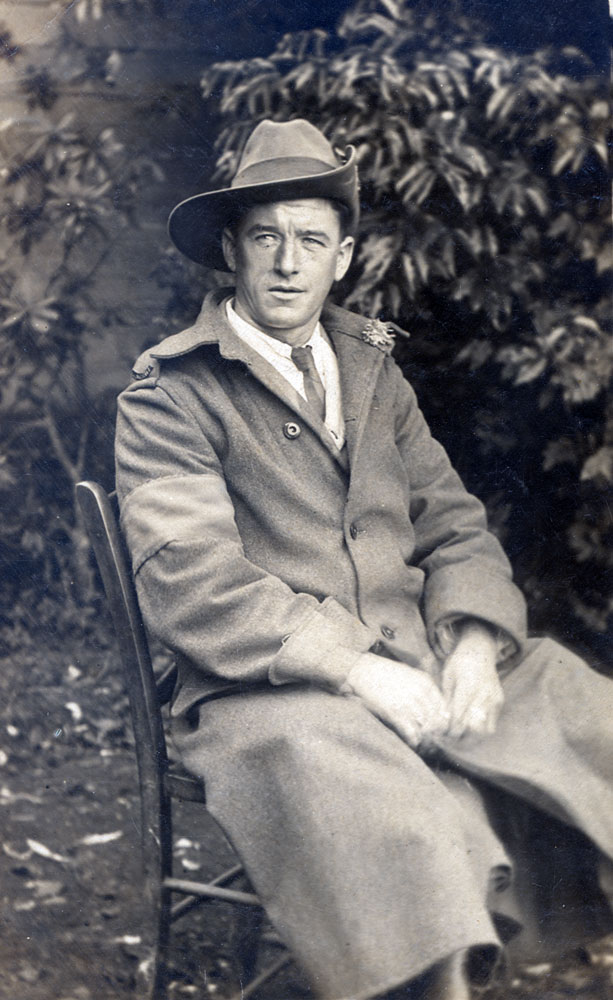
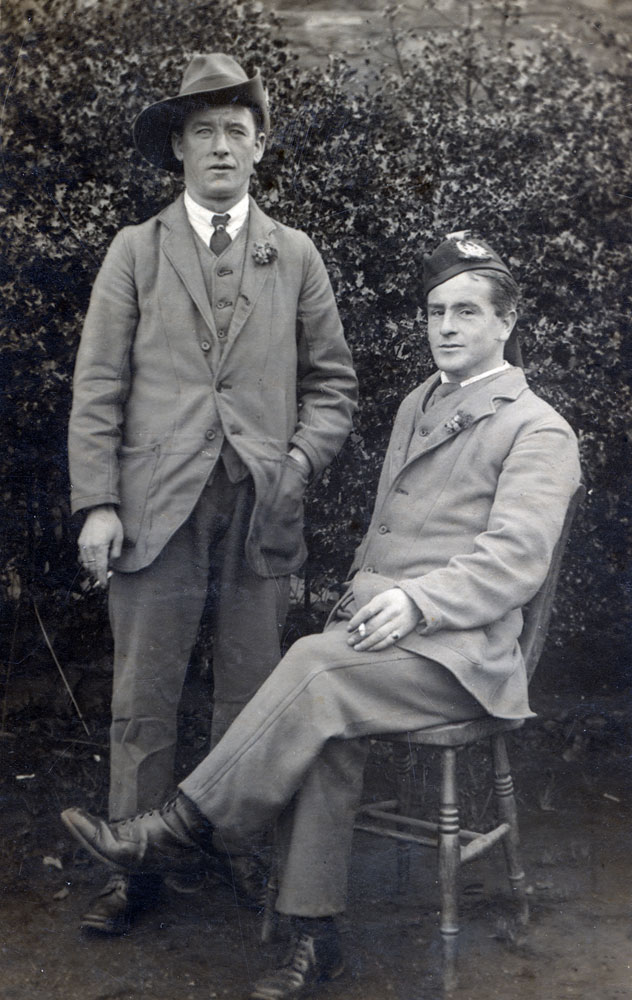
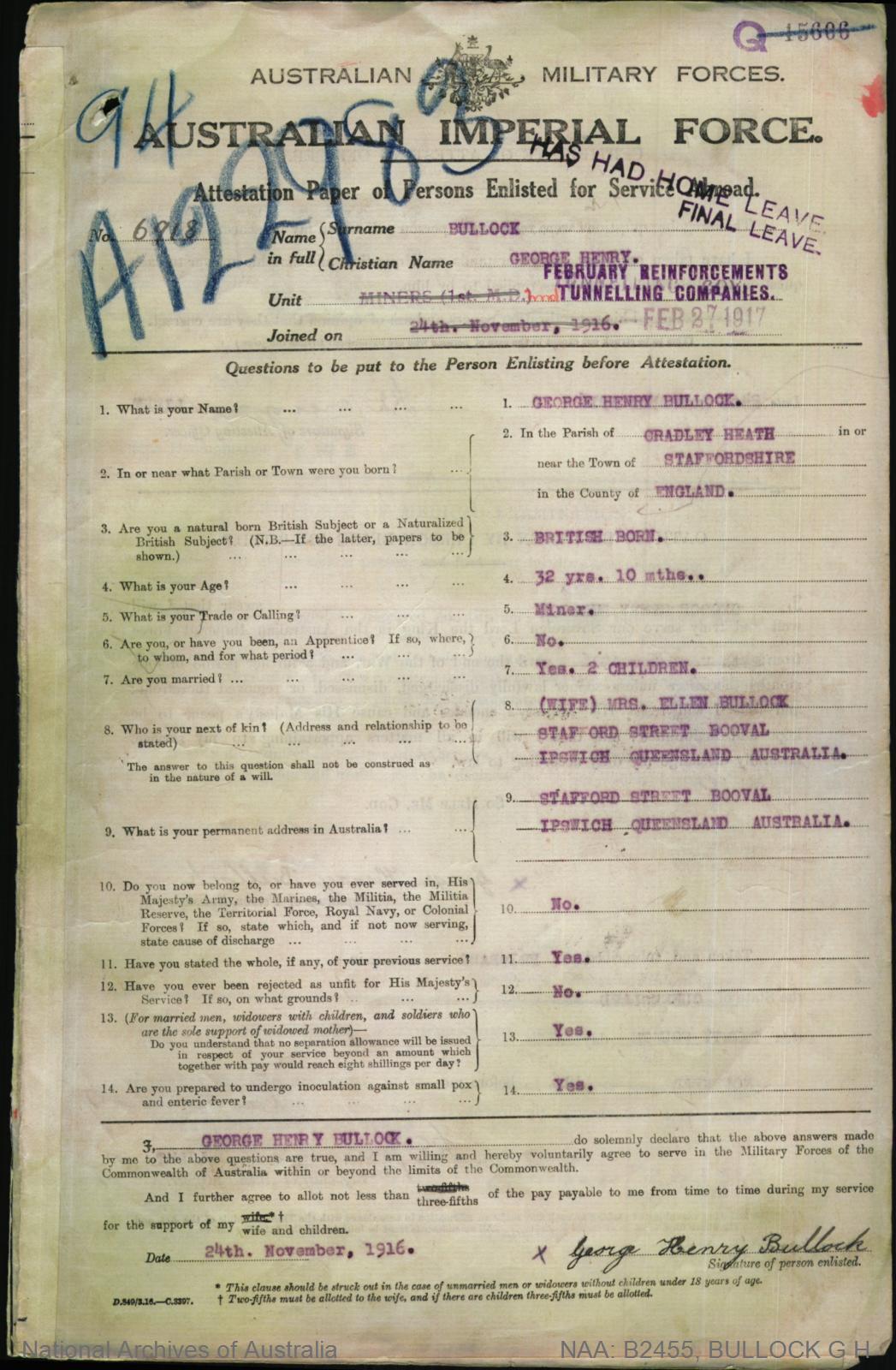
“Sapper George Bullock, of Bundamba, ex-interstate Soccer footballer, is expected to arrive in Melbourne about May 4, after three years’ service with the A.I.F.” So stated the Brisbane Courier on 5 May 1919.
Bullock did not arrive back in Ipswich in the best state. He had been gassed the previous September, which ended his war. Bullock was still suffering the effects of gas poisoning when he boarded the boat back to Australia.
He had enlisted in early 1917, aged 32, married with two children. A miner, he was assigned to the snd Tunnelling Company and arrived in France in September. Bullock didn’t last a month before illness and a knee injury caused evacuation to England. He didn’t return to France until April 1918, five months before he was gassed.
Bullock was one of several brothers who were born in Cradley Heath, Staffordshire who progressively emigrated to Queensland. The family was split between the mining communities of Ipswich and Howard.
Elder brother John lived in Howard for many years and played for the town’s soccer side as early as 1896, going on to be picked for the 1898 Queensland side. He would later manage a reformed Howard Rovers side in the years before the war.
Two other brothers, Ike (Isaiah) and Samuel played with Bullock for Booval Stars’ senior side in 1910. Youngest brother Joseph played for the club’s junior side the same year. Ike and Samuel would later move north to play for Howard Rovers under John. As well as Booval Stars, Bullock played for Blackstone Rovers, Bundamba Rangers and Ipswich City.
Bullock was first selected for Queensland in a one-off game against HMAS Powerful in 1911. The next year he earned full interstate honours when he was selected for Queensland’s tour of New South Wales. It was the first meeting of the states since older brother John had been selected in 1898.
Bullock played in the opening tour match against South Coast, which resulted in a thorough 8-2 loss. He was not selected for the first official interstate game as New South Wales beat Queensland 3-0. Bullock regained his place against the Combined Navy team, scoring in the 4-2 win. He was subsequently selected for the second game against New South Wales, but his team succumbed to a 6-0 loss. Bullock was among those not selected for the return series in Queensland two months later, though the state’s fortunes did not improve as NSW won both games.
Bullock returned to Bundamba Rangers after the war, and by the mid-1920s was also refereeing. He was elected to the committee of the Ipswich and West Moreton British Football Association in the late 1920s.
He also suffered several misadventures. In 1924 he was struck by lightning and rendered unconscious; in 1932 he was splashed with tar and taken to hospital; and in 1947 he was struck by a car and suffered concussion and fractured ribs.
Bullock passed away in September 1948.