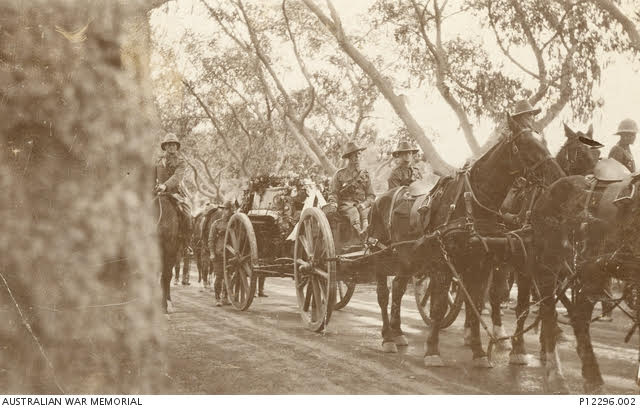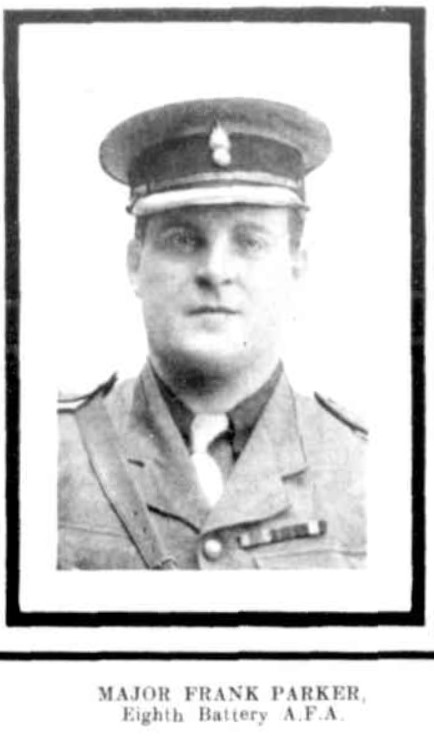
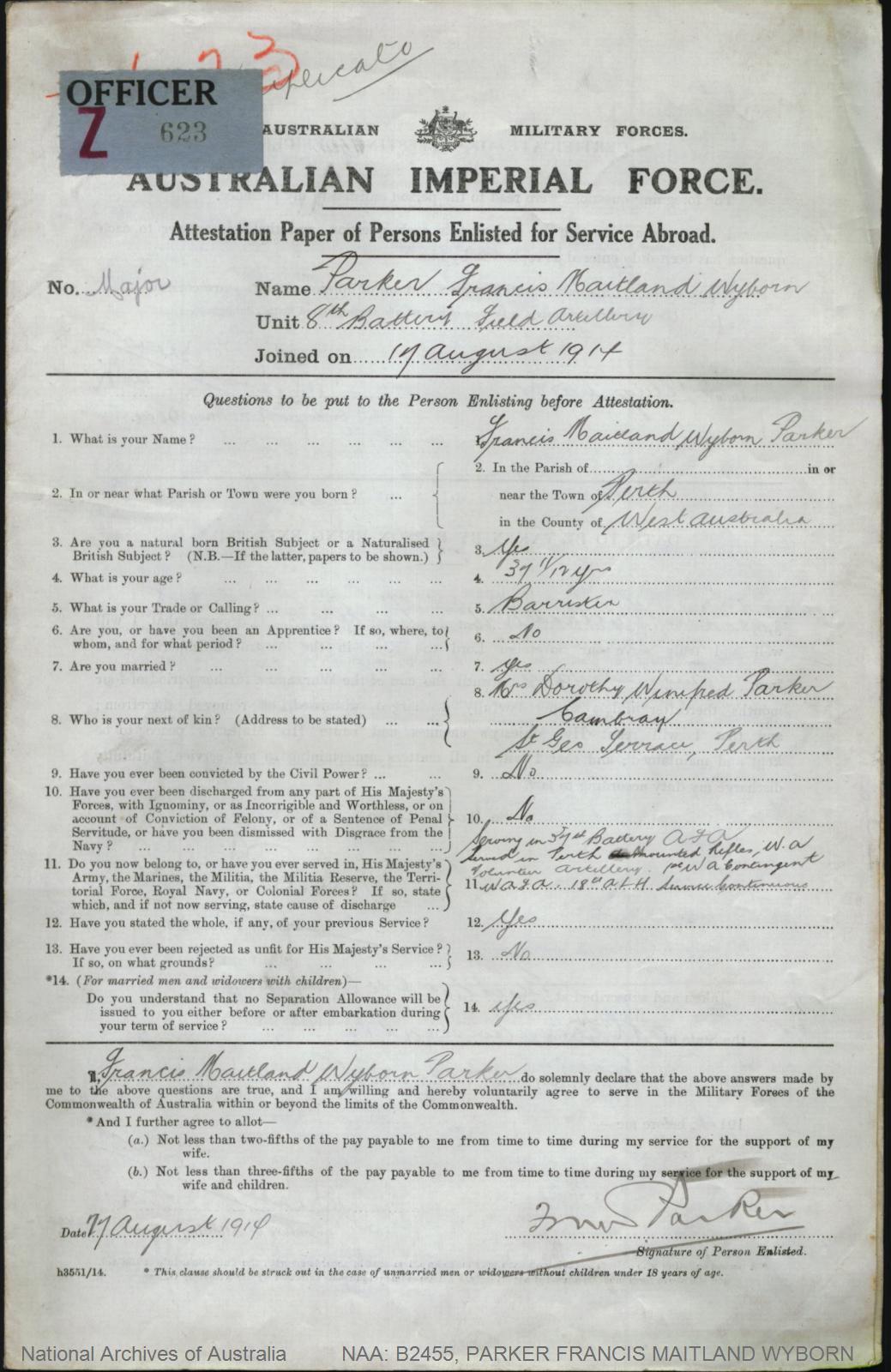
Born in Perth, Western Australia, Major Francis Maitland Wyborn Parker was a decorated soldier from the Boer War and a Crown Prosecutor in Western Australia. He played football for the Perth Club between 1896 and 1899; (an F. Parker is present on team lists as late as 1905). His brother Hugo also played and was involved in administration.
On 17 April 1915 the West Australian reported, “We have also lost a pioneer of the game in Major Frank Parker, who was a playing member of the Perth Club in the late nineties.”
Although not mentioning his football, a much more substantial tribute to his life was published in the Geraldton Express on 24 March 1915, a week after his death.
The Late Major Parker.
The very many friends of Major Frank Parker, the genial Crown prosecutor, will learn with deep regret that news reached his family on the 19th of his death, on March 17, at the Mena encampment, Egypt, of meningitis.
Major Francis Maitland Wyborn Parker, D.S.O., is a son of Sir Stephen Henry Parker, ex-Chief Justice of Western Australia, and was born at Perth on September 18, 1876. He was educated at the Perth High School, on leaving which he was articled to the firm of Messrs. Parker md Parker, and three years later, on July 19, 1899, he was admitted to the Western Australian Bar.
He practised his profession at Perth and elsewhere during the years 1903 to 1909, and in February of the latter year joined the Crown Law Department in the capacity of Assistant Crown Prosecutor. Later on, when the late Mr. A. E. Barker died, and the position of Crown Prosecutor became vacant, Mr. Parker accepted the office, which he filled until recently, when, on taking a commission in the expeditionary force, he obtained leave from his departmental duties.
Early in life the deceased gentleman associated himself with the military forces of Western Australia, and when the South African war broke out, he went on service with the first contingent, as senior subaltern and captain, under Major Moor. In July, 1900, on the death of that officer, he took command, which he retained until December of the same year.
Major Parker then returned with the contingent to Western Australia, but subsequently went back to South Africa, and served on the staff at the base of operations as embarking staff officer, during the last twelve months if the war. During the South African campaign he saw service in the Transvaal, Orange Free State, and Cape Colony, and was in action at Johannesburg, Pretoria, Diamond Hill, Vet River, Zand River, and Colesburg. He was mentioned in despatches, and, in addition to the award of the D.S.O., he received the Queen’s Medal with four clasps, and the King’s Medal, with two clasps.
When peace was proclaimed, he settled at Johannesburg, where he filled the position of Registrar of the Special Criminal Court for a year, ultimately returning to the land of his birth in 1903. For over two years he held the command of the 18th Australian Light Horse Regiment, resigning in March, 1912. Subsequently he entered the artillery, and when (the European war broke out, he was one of the first officers to volunteer for service with the section of the expeditionary force being raised locally.
He was given a commission as Captain and Brevet Major in the 6th Battery of the 3rd Field Artillery Brigade, and in that capacity sailed with the first contingent for Egypt.
In 1901 Major Parker married a daughter of Mr. John Stenhouse, of Melbourne, and he leaves a widow and one son.