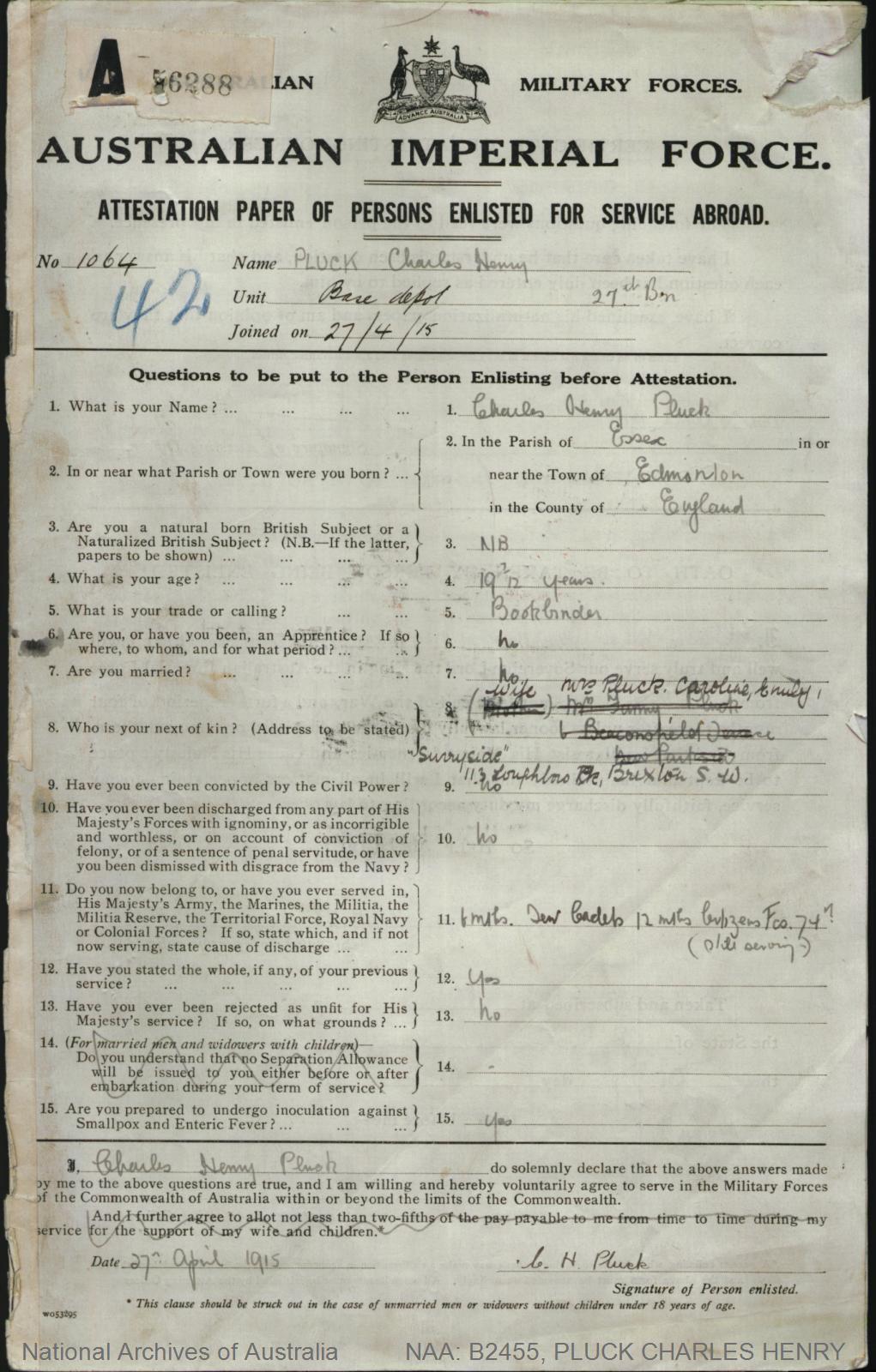
Charles Henry Pluck was born in Edmonton, north London, on 7 August 1896. He played for North Adelaide reserves in 1914; they won their reserve league whilst North’s first team were winning the First Division league title.
He joined up around the time of the Gallipoli landing, in April 1915, giving his occupation as “book binder”. With the 27th Battalion, he arrived at Gallipoli in time to participate himself, but was immediately charged with stealing the property of a New Zealander.
Arriving on the Western Front in 1916, his front line service was punctuated by a worrying list of misdemeanors: falling out of the line of march, failing to carry out orders, offences to the prejudice of military discipline, etc. This was rounded off in February 1918 in London by using abusive language and violently resisting arrest whilst AWL. All this seemed to refute the misconception that book binding was a trade for the mild mannered and retiring. Serving at Gallipoli, however, seemed to unbalance a lot of men.
Pluck found time in London to marry Caroline Emily Gould in 1917. Back in the peaceful surrounds of Adelaide the couple had five children in eight years. In the early 1930s Pluck was still in trouble with the authorities, charged with an unspecified offence. Charles and Caroline were granted a divorce in 1948, and in the same week he was injured falling off a tram in the city. At this time his occupation was “storeman”.
Charles Henry Pluck’s date of death is not known for certain – though Ancestry.com states 1970 without supporting evidence.
Who knows how his football playing career would have progressed but for the interruption of the Great War?