

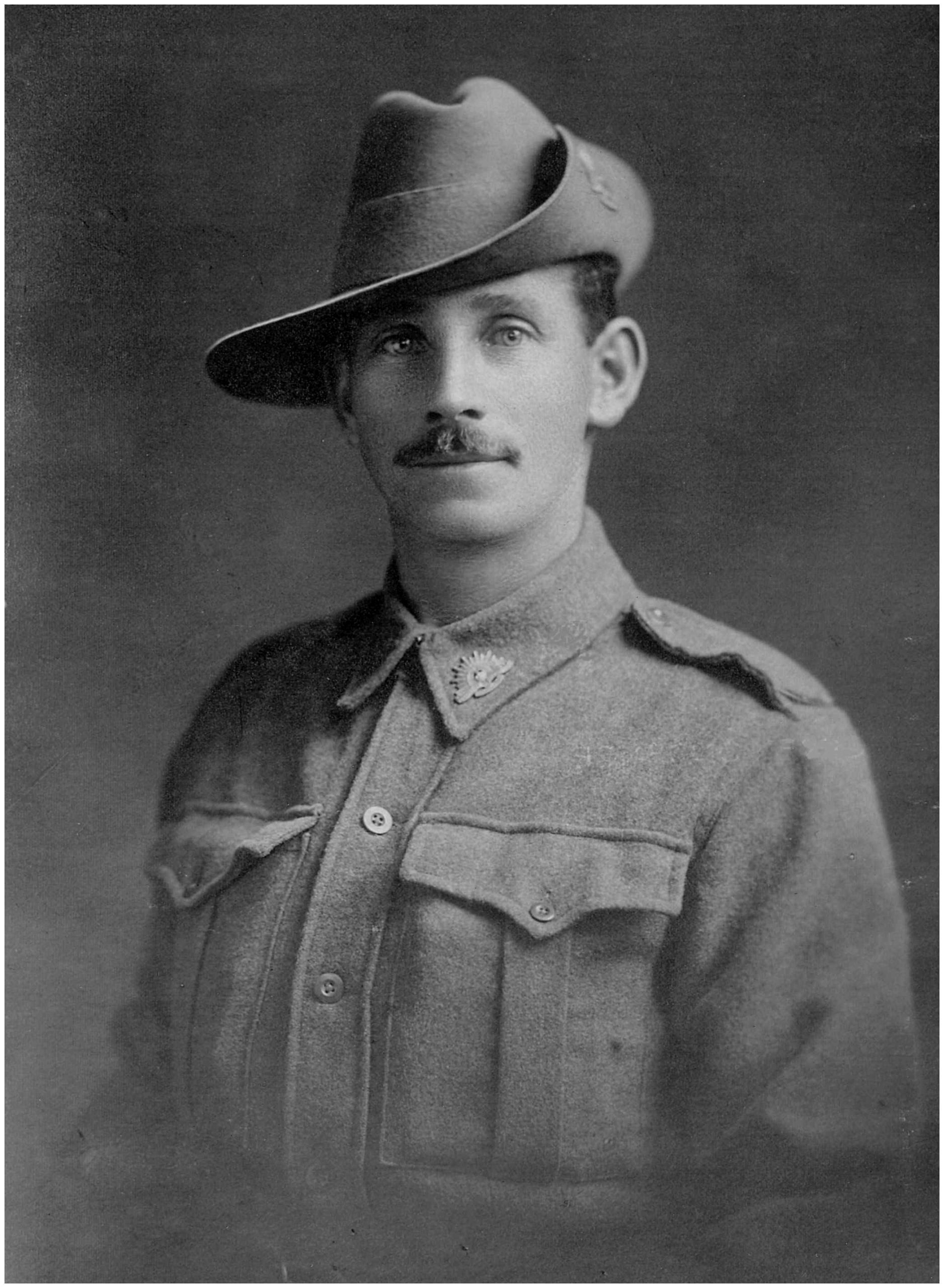
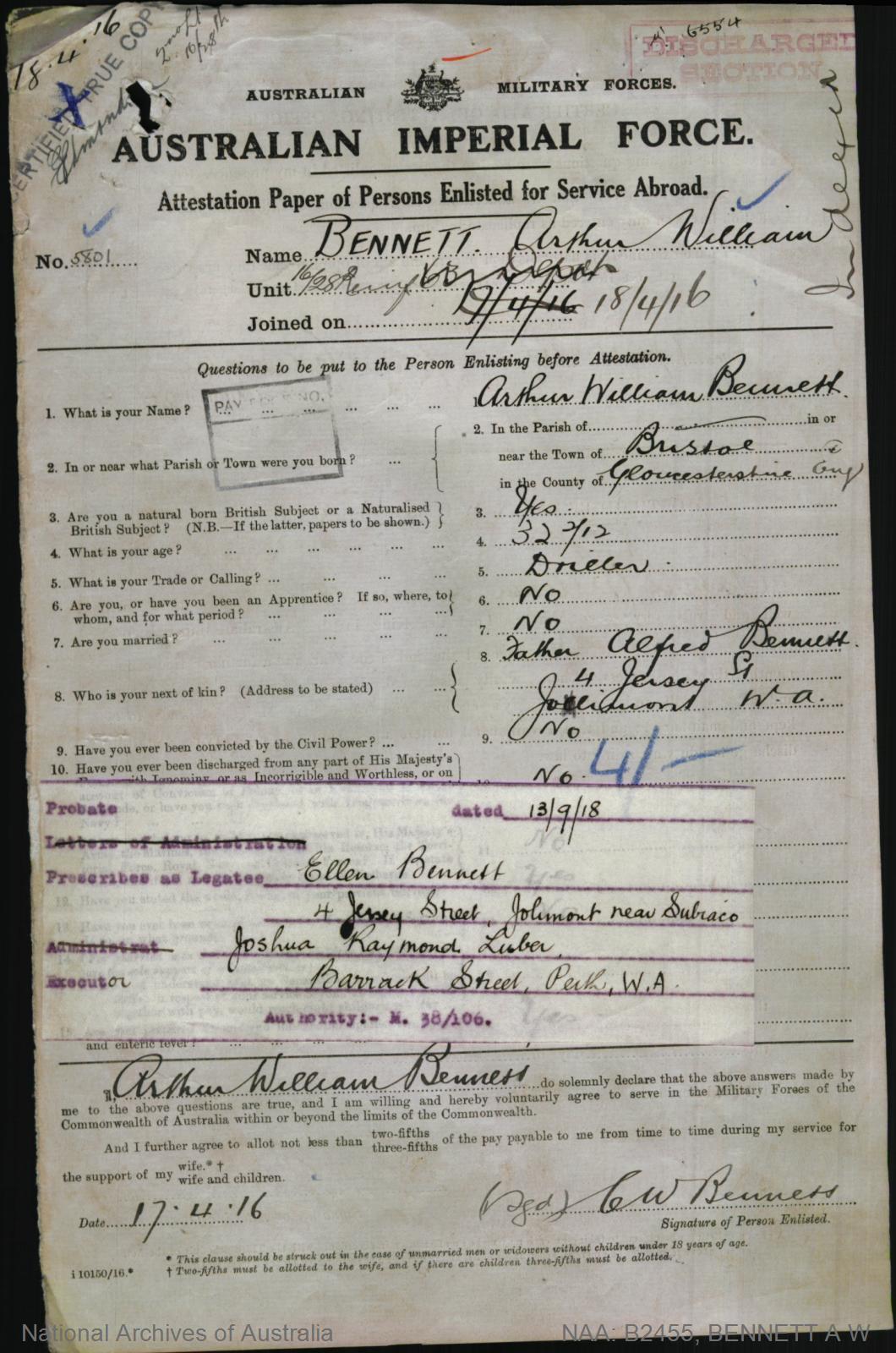
Born in the town of Marshfield, England, in January 1884, Arthur William Bennett was the third of four children to Alfred Bonnette and Ellen Beazer. Arthur Bennett’s early years were somewhat nomadic, presumably due to his father’s occupation as a land surveyor, with the family living in Tenby (Wales), Midlothian (Scotland) and Leicester (England).
19-year old Arthur Bennett arrived in Perth in May 1903 with his mother, Ellen, and younger brother, Henry. It appears his father, Alfred, had made the journey sometime earlier and set-up home in Jolimont, a relatively new sub-division of West Subiaco. Arthur Bennett found employment in the building industry, as a driller, and, like many young men, sport occupied his downtime.
Arthur Bennett first stepped onto a football field with City United in 1908. He was a major contributor to City United winning the Division One league title along with the Charity Cup in his first season, and the Challenge Cup and Shield the following year. Local newspaper reports refer to Arthur as ‘Bennett’, although there is no suggestion he legally changed his surname.
Arthur Bennett’s talents between the posts were rewarded with selection in the State team which, in May 1909, embarked on a historic ten-game tour of New South Wales, Victoria and South Australia. Tour manager William Thomas would declare “Since Newcastle he has earned his title to the rank as the greatest goalkeeper seen in New South Wales.”
For the 1910 season Arthur Bennett joined competition newcomers Subiaco, where he played alongside Henry. The following year he returned to City United, taking Henry with him and together the brothers featured in the 1911 Charity Cup final win over Fremantle and two years later played their part in capturing a second Division One crown for the club.
Arthur Bennett was 32 years of age when he enlisted as a Private in the 29th Battalion. He embarked from Fremantle in October 1916 and the following month spent a week in the ship hospital with pleurisy. Soon after reaching England he was hospitalised suffering from bronchitis and influenza before being diagnosed with tuberculosis.
Invalided home to Western Australia in July 1917, Arthur Bennett was sent to the 22nd Australian Auxiliary Hospital, a purpose-built tuberculosis sanatorium, in Wooraloo. Discharge papers issued in March 1918 states he “had a cough for about six months (and) brings up small quantities of blood at times. Losing weight rapidly”.
Arthur Bennett was 33 when he passed away on June 27, 1918, at Wooraloo with his parents by his side.