
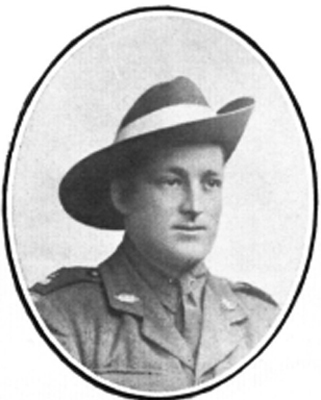
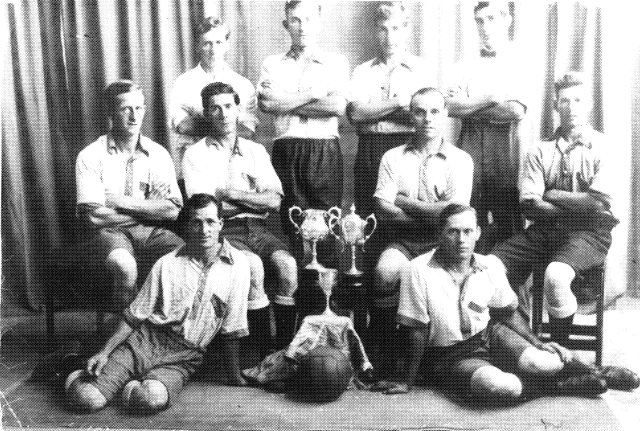
Charles Ward was among several returned soldiers who helped establish soccer in the Sunshine Coast hinterland in the early 1920s. Ward played for North Arm, the dominant team in the first few years of the North Coast Football Association league, which commenced in 1921. He appears, aged around 34, in the front left of a picture of the North Arm team which won the 1922 premiership.
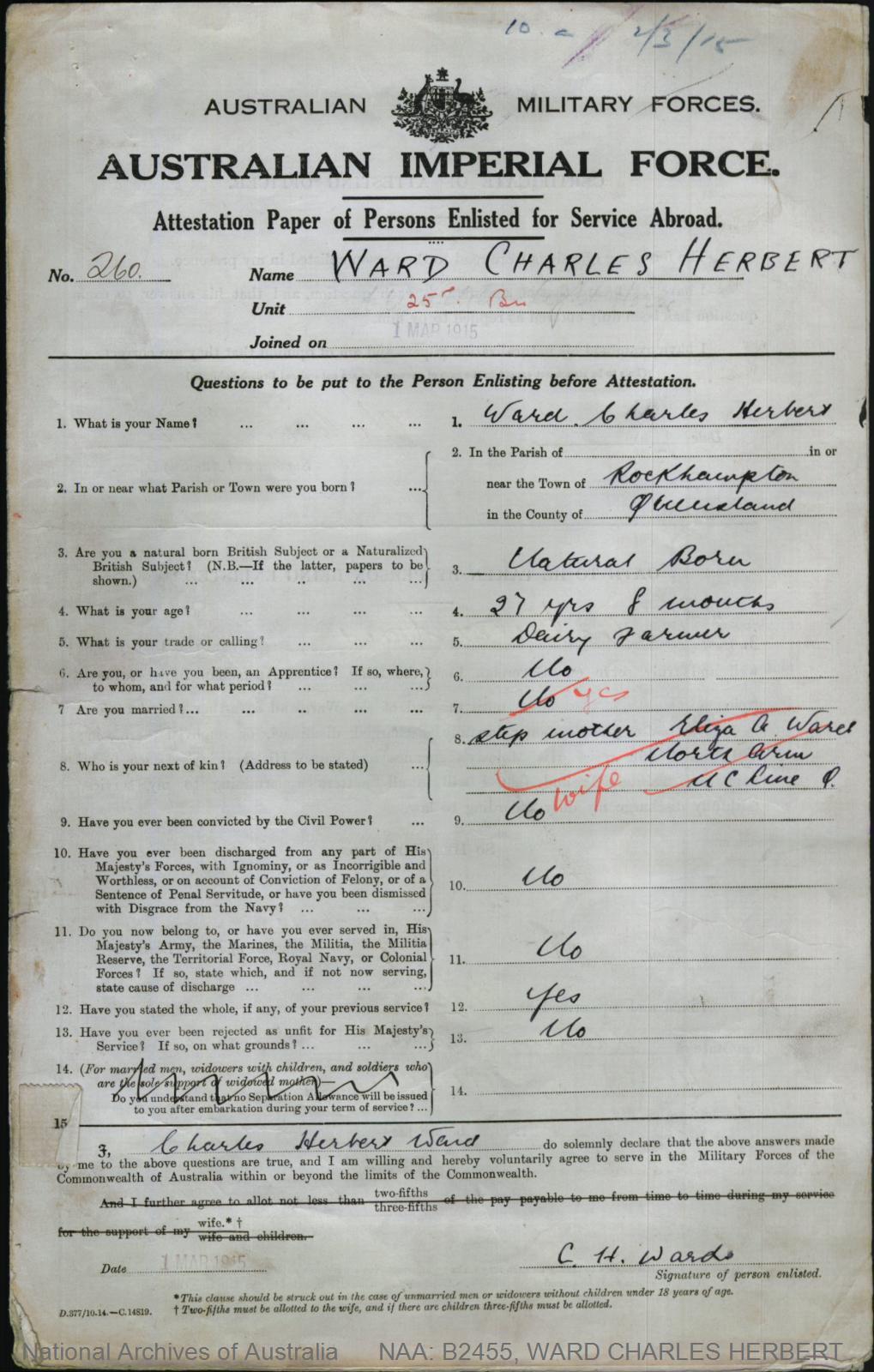
A dairy farmer from North Arm, Ward was 27 when he enlisted in March 1915. He was assigned to the 25th Battalion and sent to France. He wrote several letters which appeared in the Daily Standard in late 1915 and early 1916. In the letter which appeared on 20 November 1915 he wrote:
I must own up to being a bit frightened the night we landed. We were moving along to where we had to camp when one of the boats opened fire, and we thought the Turks had discovered us and opened fire, but as soon as we found out where they were going to we were all right…
He also described the trip from Alexandria and listed their daily rations (“tea, sugar, condensed milk, bacon, rice, jam, ‘bully’ beef, and biscuits. Of onions we have as many as we want.”). His letter written mid-December and published on 25 February 1916 described the last days at Anzac while awaiting the orders to evacuate.
On Wednesday, November 24, we received orders to pack up, as we were leaving for Murdos (sic) in an hour’s time. False alarm; but we may go some time. I might say up to Saturday all hands had their packs done up, as we still expected to go away.
After Gallipoli, the 25th Battalion was reallocated to France. Ward received a gunshot wound to the elbow in August 1916, likely at Pozieres, which required evacuation to England. He returned to France in March 1917. Later that year he was promoted to Corporal, then acting Sergeant a month later.
In December he was transferred to England to the Officer’s Training Corp where he attended training in London and Oxford. In May 1918 he was reported as “a satisfactory but rather insignificant cadet. Plays and works hard and will eventually make a good platoon commander.” Ward subsequently qualified as a 2nd Lieutenant in July and returned to France in August.
In October he was transferred from the 25th to the 26th Battalion shortly after both battalions fought along the Beaurevoir Line. It is uncertain whether Ward took part in the fighting, which was the last action seen by either battalion. Ward largely stayed in France until April 1919 when he started back to Australia. On arriving in England he was reunited with Bertha Aris, who he had met while training in Oxford and later married in June 1918.
The couple arrived in Australia in September 1919. They spent many years as farmers in the Sunshine Coast hinterland, though later in life Ward worked in the butter factory in Eumundi. Ward died in April 1975.