


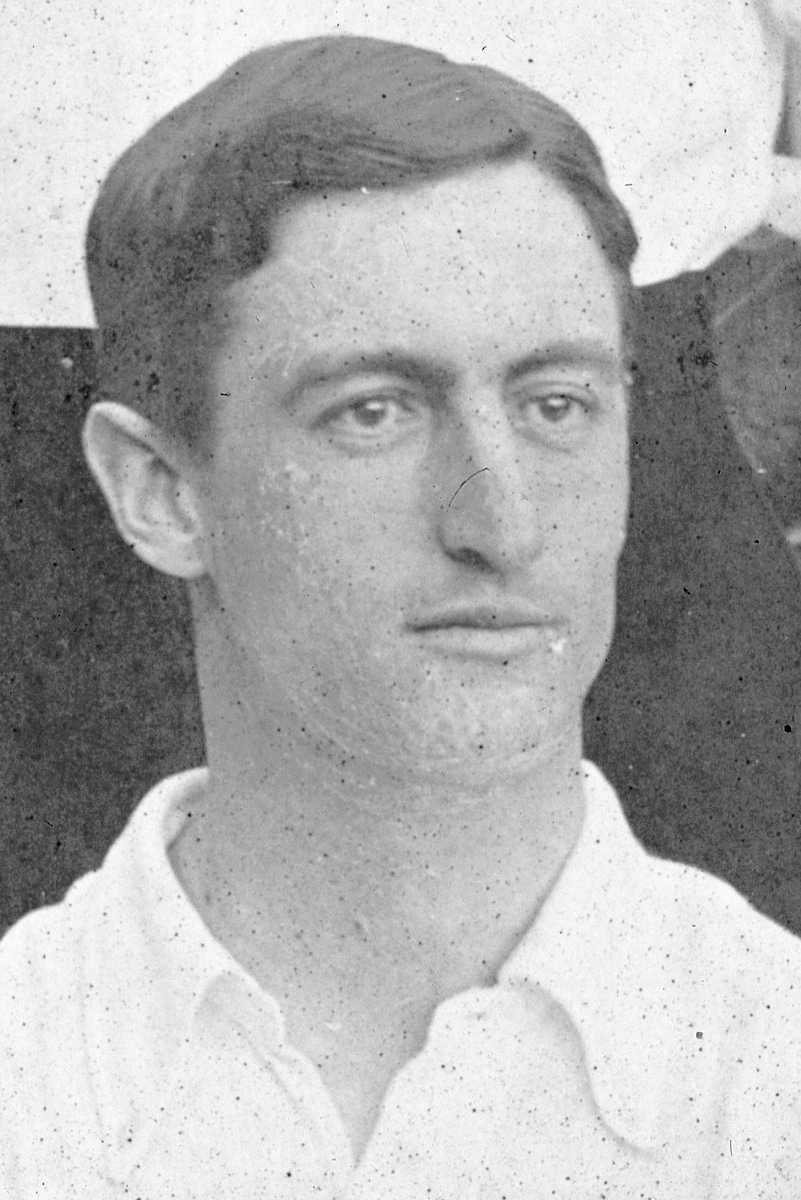
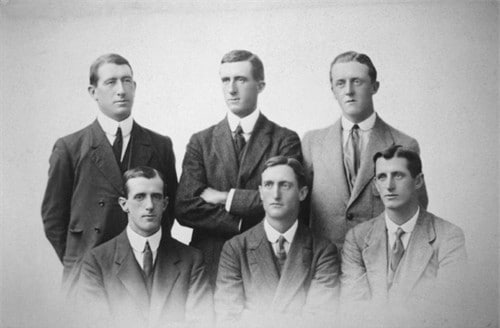
West Australian football is profoundly indebted to Frederick Burt for the role he played in the establishment of organised football in the state. Born on 6 December 1877 in Perth, Western Australia, he was the fourth child to prominent politician, lawyer and grazier Septimus Burt and Louisa Hare.
All five Burt brothers studied at Repton School in England, which is where Fred acquired a decent level of skill with a football. On completion of his studies he returned to Perth and in May 1896 penned a series of several letters to the West Australian under the name ‘An Old Reptonian’ calling for the formation of “a football club here in Perth for the ‘English Association’ game.”
Fred was a member of the six-person working group responsible for structuring the British Football Association of Western Australia. During the inaugural league season he played in the forward line for Perth BAFC and, in early July, gained selection in the Combined Perth XI that lost to a visiting team from the goldfields town of Southern Cross.
In total, Fred was with Perth for eleven seasons, captaining the club to their first league title in 1902 and adding a second three years later. He was part of the side which, in 1904, won the Challenge Cup & Shield and Charity Cup double. When advised by his doctor to miss the 1899 season, he took up the positions of club secretary and treasurer in addition to running the line.
Fred also participated in West Australia’s first two representative games, against the touring English Cricket team in 1902 and 1904. He chaired the association in 1906 and in April of the following year was recognised with Life Membership. Fred was something of an all-round sportsman, also enjoying hockey and cricket; in fact, he served on the West Australian Cricket Association committee for a period.
Admitted to practice as a barrister and solicitor in December 1904, Fred became a partner in the family firm Stone & Burt two years later. In 1908 he married Melbourne-born Gladys McMurtrie and together they set up home on View Street, Peppermint Grove, where they welcomed the arrival of son Richard and daughter Beatrice.
Fred resigned from Stone & Burt in late 1914 after he lost company money gambling. “We hereby notify that Mr Frederick Julius Augustus Burt has ceased to have any connection with our firm from the 8th day of September last” read a notice published by Burt & Stone in the West Australian. Fred was sent to England by his father, never to return; his wife and children chose to remain in Perth.
In February 1915 Fred, now 38, was passed fit for duty with the British Mediterranean Expeditionary Forces. A Lieutenant attached to the Royal Engineers’ Signal Service, he served on the Gallipoli Peninsula where his duties included providing communications support for the Allied forces, including the censoring of soldiers letters to prevent sensitive military information from falling into enemy hands.
The Royal Engineers spent much of 1916 in Egypt before being deployed to Palestine early in 1917. Although some way from the front line, Fred would no doubt have felt the pain of losing two brothers, 38-year old Theodore at Montauban (July 1916) and 32-year old Francis at Villers-Bretonneux (April 1918), to the war. Fred had risen to the rank of captain by the time he returned to England in October 1918.
Following demobilisation, Fred resumed his solicitor business in England, possibly London. Although he did not remarry, he was acquainted with Rosetta Clements with whom he had a daughter, Doris, in 1925 in the north London suburb of Islington. By 1939 the still single Fred was living in Cambridge and working as a garage storekeeper.
Frederick Burt was 87 when he passed away on 26 February, 1965, in East Grindstead, England.