


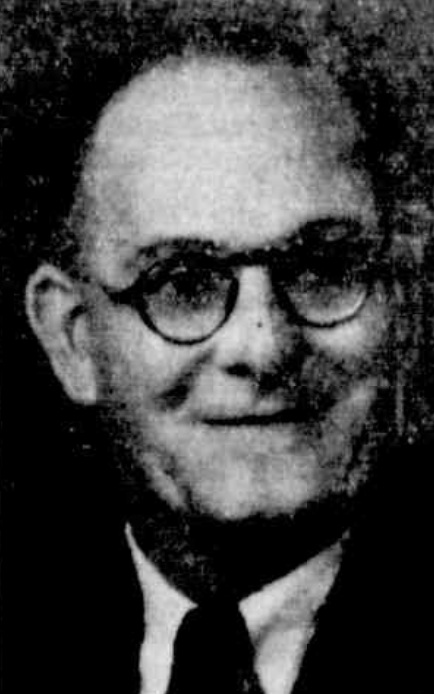
The Newcastle Sun of 11 October 1918 paraphrased a letter from Frank Jones, the Young Wallsend goalkeeper who had gone to U.K. as part of the Australian Munitions Worker scheme.
I had an interesting letter from Frank Jones, the ex-inter-district goalkeeper, recently. Frank is at munition work in Scotland, and mentioned the fact that he played in the Currie Cup with his team, the Dockyards. They won the final, five goals to nil. The first half, so Frank says, was interesting and even. In the second half Dockyards, due to strict training, walked all over their opponents.
Goalkeeper Frank states that he was married on August 5. This Yorkshire lad married a Lancaster lass, and so once again the red and the white rose are united. Frank mentions Peter Coppock, and states that he wrote to Aubrey Searle, but received no reply.
Searle, it should be remembered, returned a few months ago, walking on crutches after treatment in the military hospitals. Aubrey discarded his crutches, and now walks with but a slight limp. Frank would not know that Searle was back. The letter concluded with best wishes to his soccer friends, all of whom join in wishing Frank good luck in his Benedict days.
Jones was a Yorkshire lad, having lived for at least some time in Barnsley. The Newcastle Sun of 8 September 1938 published a recollection of a lengthy cup tie soccer game in the Barnsley district between Grimethorpe and Wombwell Main in 1905. Jones wrote a reply which appeared in the same newspaper two days later in which he claimed he had attended the game, and that it went for over three hours. Jones later played in another lengthy game at the same ground which went for two and a half hours.
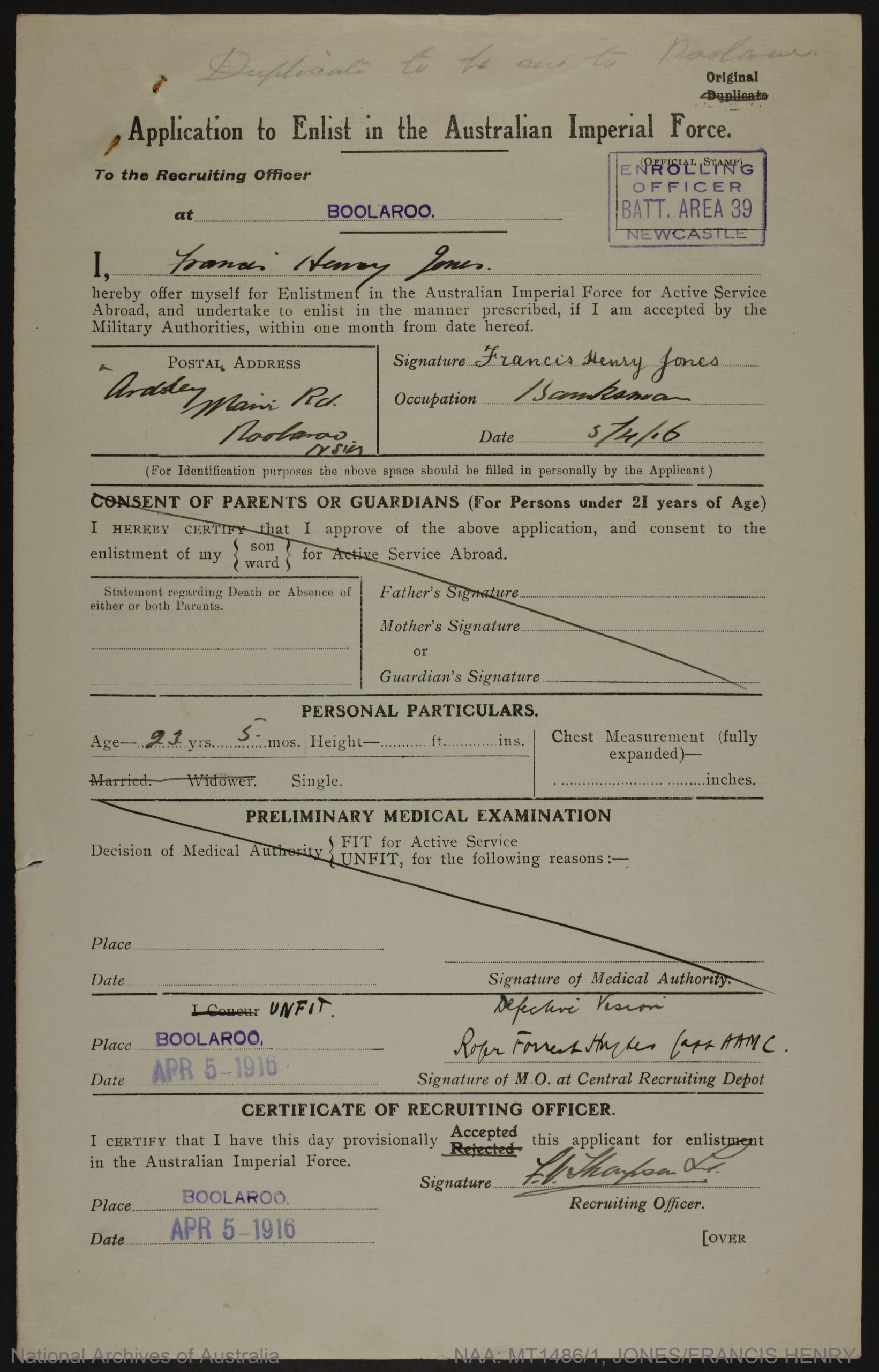
He had migrated to Australia by 1913. Jones attempted to enlist with the AIF in April 1916 and then again in January 1917 at the age of 23 but was declared unfit for service due to defective eyesight. He signed up instead for the Australian Munitions Workers program, one of around 6000 Australians who provided skilled workers and later navvy labourers to war industries in the U.K. and occasionally France from 1916.
Jones captained Young Wallsend in 1917 before he left for England. Arrow reported, on 24 May 1918, that his departure led to Young Wallsend not winning a game in his absence. After he returned to the Newcastle district in 1919, he played for Boolaroo, Holmesville and Newcastle City.
A short biography published in the Cessnock Eagle and South Maitland Recorder on 10 October 1944, gave additional information about his soccer career. Jones played soccer between 1913 and 1935, initially with Wallsend and then for Cessnock and Kearsley clubs after moving to the Cessnock area in 1922. He was also the Secretary of the Cessnock and District unemployed and relief workers which provided social services during the depression. The biography claimed he “was able to procure for the unemployed over 2,000 sets of dentures, 2,500 sets of spectacles, and 2,000 railway passes for dental treatment.” At the time of the biography, Jones was a member of the Cessnock Hospital Board of Directors and running for a position of Alderman on the local council. He was duly elected in December.
Jones collapsed and died in the shower in 1948 at the age of 58. Among the funeral notices published in the Newcastle Morning Herald on 20 December was one by the South Maitland Soccer Association. The Cessnock Eagle and South Maitland Recorder remembered: