
Across the country the names of the fallen are inscribed upon cenotaphs and honour boards, but there is one honour board upon which the names of around seventy men was marked with more than the usual care.
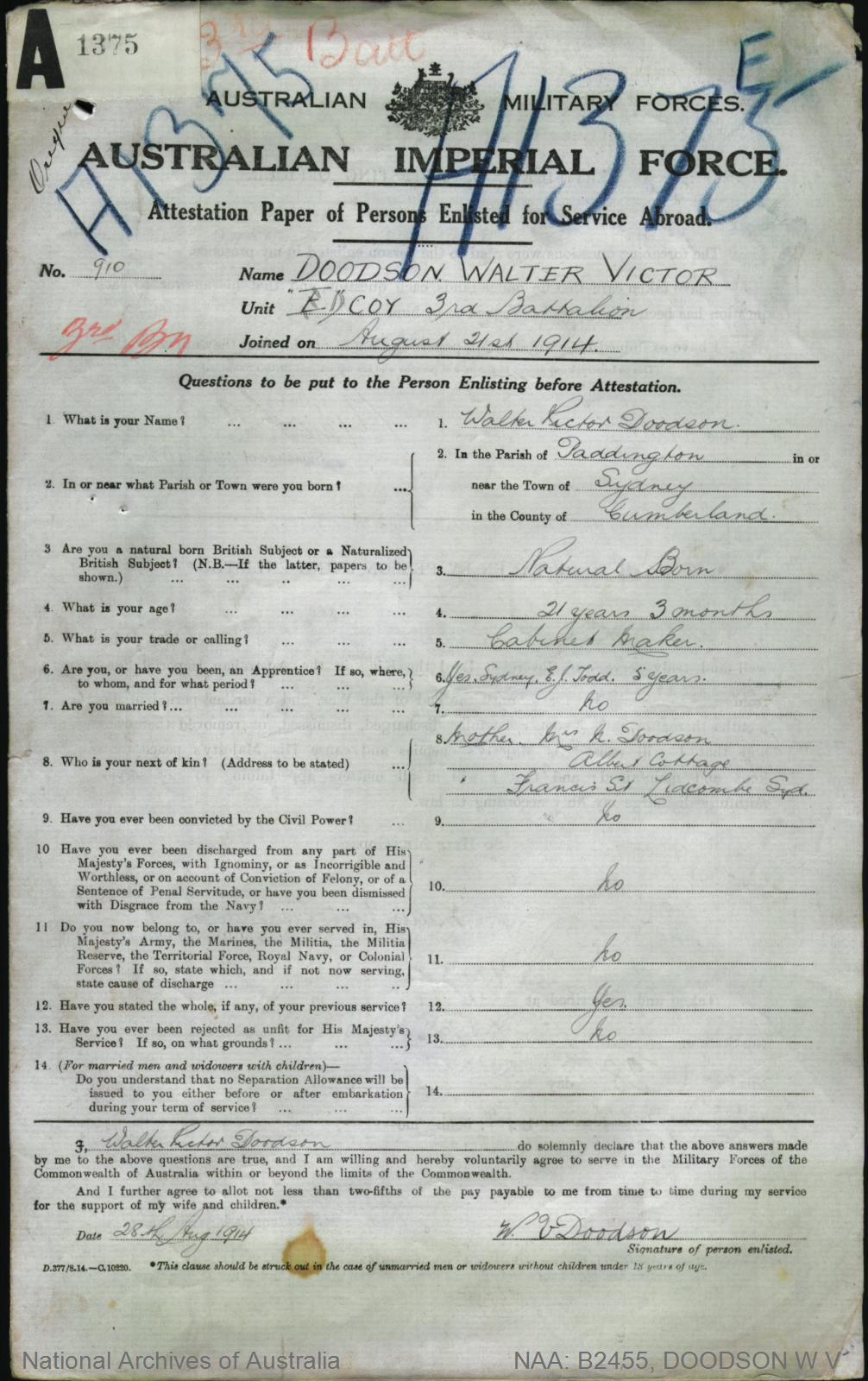
Walter Victor Doodson was born in Paddington in May of 1893, the sixth of nine sons born to Edward Doodson of the Victoria goldrush town of Beechworth. Of all the Doodson brothers, three served, and sadly only two returned home. Walter, a cabinet maker from Pyrmont, constructed the Pyrmont FC honour board out of the finest silky oak, it was a board which would carry the names of his brothers Frederick and Charles.
Wal was the second of the brothers to enlist, he signed up just three days after younger brother Freddy, no doubt instructed by his mother Matilda to look after the young lad. Wal was 21 when he enlisted on 21 August 1914. He was assigned to E-Company of the 3rd Battalion of the AIF and set sail for Europe on October 20, and arrived at camp in Cairo in early December. Following a number of months training in the desert, E-Company joined those other units to be deployed to Gallipoli where his actions gained him a promotion to the rank of Lance Corporal.
Sadly younger brother Frederick was wounded during the landing and was evacuated but died only a day later, and whether or not Walter even sighted Freddy during the landing is a mystery. A few months later Wal was evacuated to hospital in Cardiff suffering from cellulitis in his right knee. He recovered to return to the front only to suffer a bayonet would to the same knee shortly after, an injury that resulted in his being invalided home in January of 1916.
Being a goalkeeper like his younger brother, Wal was less reliant on his running abilities and was able to return to the game in 1917 becoming a star contributor to the club. Wal never married and moved out of the district to Lidcombe where he spent the rest of his days.
The search is now on to find Wal’s honour board and return it to a place of prominence in football.