

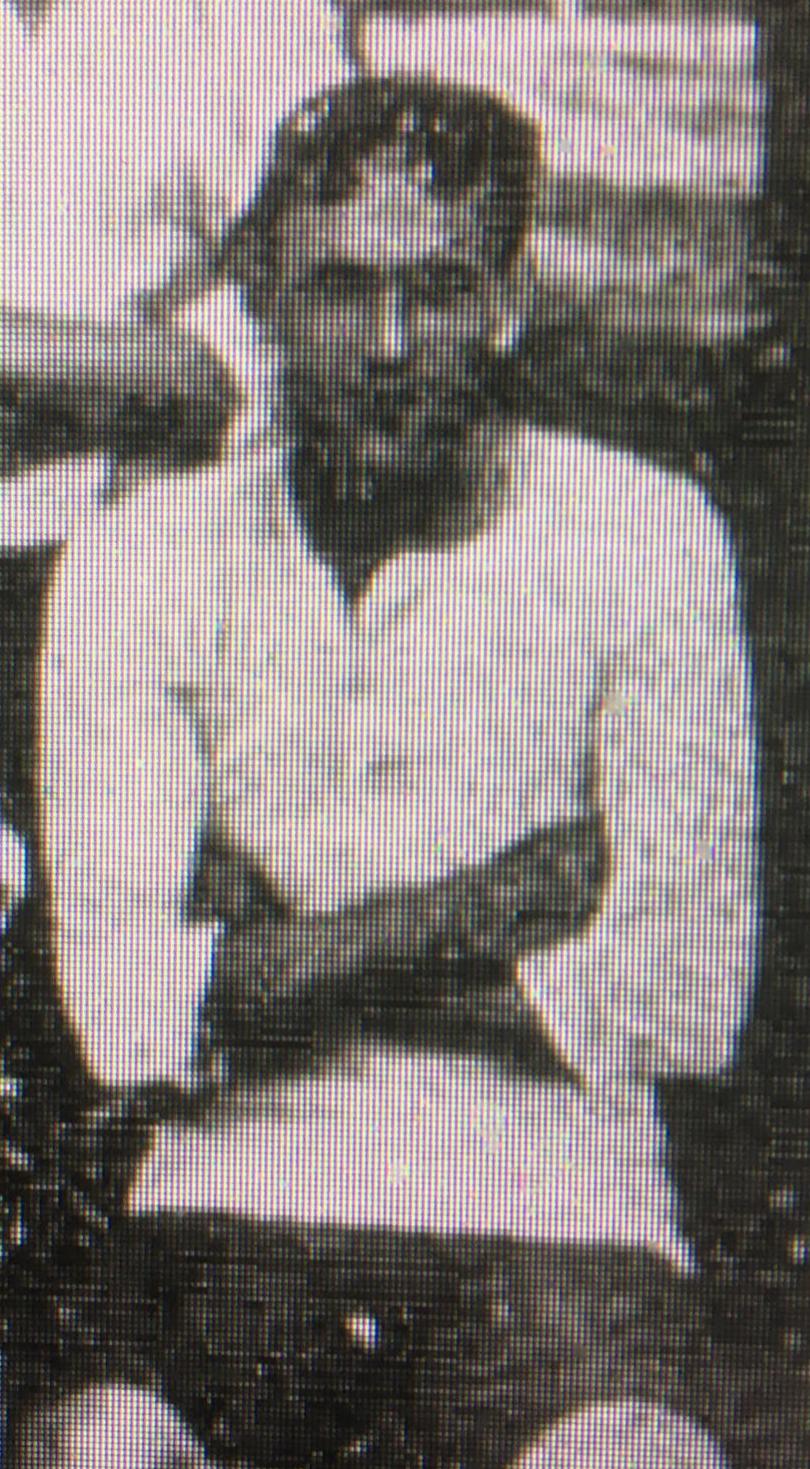
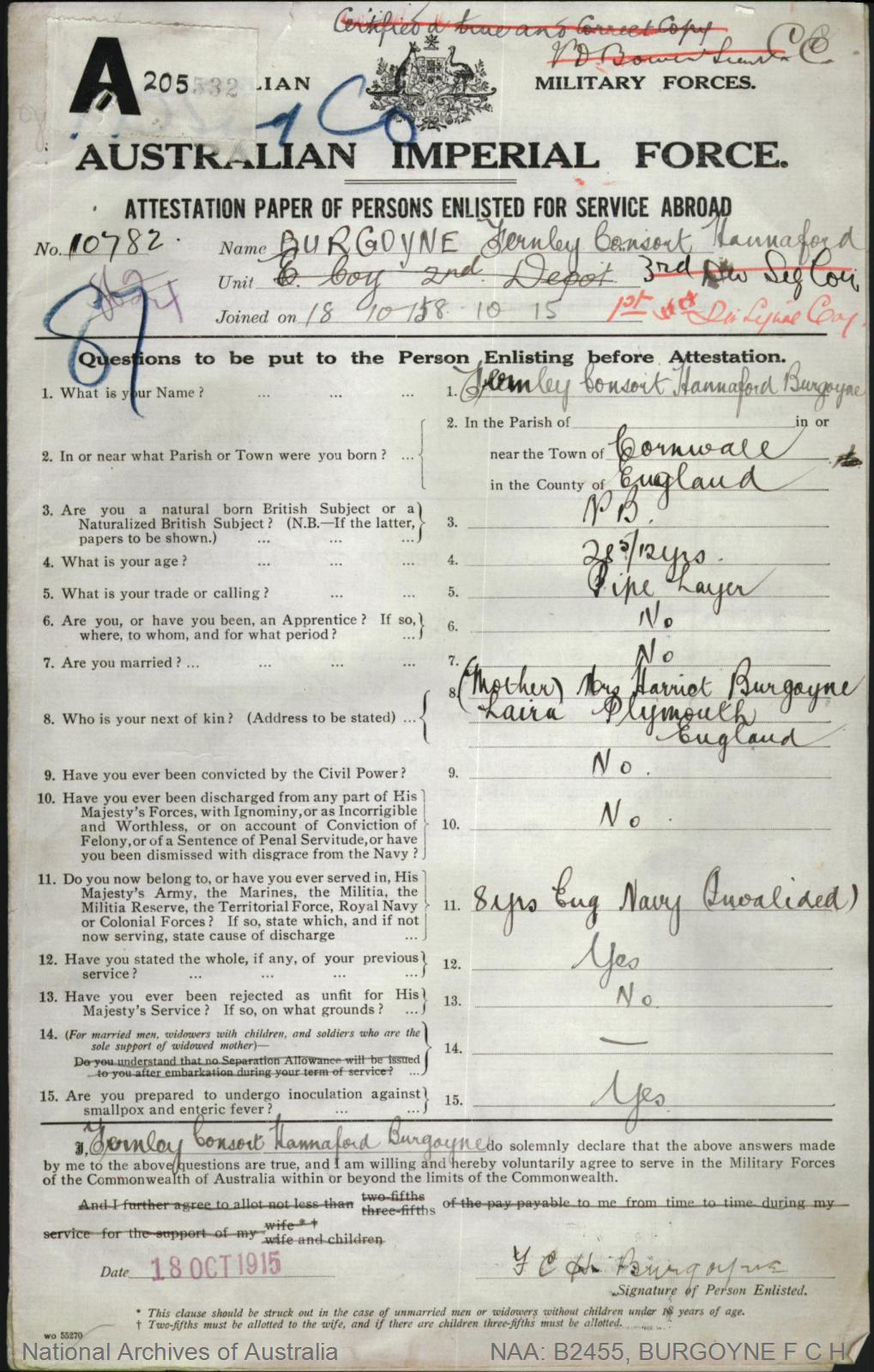
Fernley Consort Hannaford Burgoyne was born at Mylor Bridge, near Falmouth, in 1887. In Adelaide by 1912, his lengthy handle may have hinted at pommy pretentiousness, so he was generally known as “Burgy”. Although Cornwall has never had a Football League club, the Cornwall County FA had formed in 1889, so Burgoyne came from a well established football culture.
He was soon recognized in Adelaide as a “crack” forward. The Express and Telegraph, in a summary of the 1913 season on 25th September stated that “Burgoyne, when he played, was undoubtedly the best centre forward in the state”. This might have implied that his work as a pipe layer might have prevented him from turning out regularly for his club.
He played for North Adelaide in 1912 and 1913, and transferred to St Peters in 1914, winning the Second Division and reaching the quarter finals of the Cup. In June 1914 Burgoyne played for an Association XI at Petersburg, scoring a goal in a 2-0 win.
He joined up at the conclusion of the 1915 season. Enlisting at Morphettville on 18th October 1915, he served on the western front with the 3rd Division Signal Company, surviving intact apart from punishments for minor indiscretions (AWL, gambling).
Burgoyne returned to Adelaide on 8 September 1919 which meant he missed the Peace Day match, but he was back in action in 1920, rejoining North Adelaide. Now in his early 30s he won his only official state team cap, in the 0-0 draw with HMS Renown.
Employment in the country removed him from the football scene for two years, but he was back in Adelaide playing for Prospect in 1923, helping his club win the Cambridge Cup with a vital goal in the final. In the same year Burgoyne married Nellie Ball in a registry office. 1924 saw him playing for Holdfast Bay, after which he turned out for the Veteran Players’ Association in special matches until 1928.
Burgoyne’s son, also named Fernley, played Australian Rules Football and joined the RAAF in the Second World War.
Fernley Burgoyne snr died in Adelaide in 1963.