
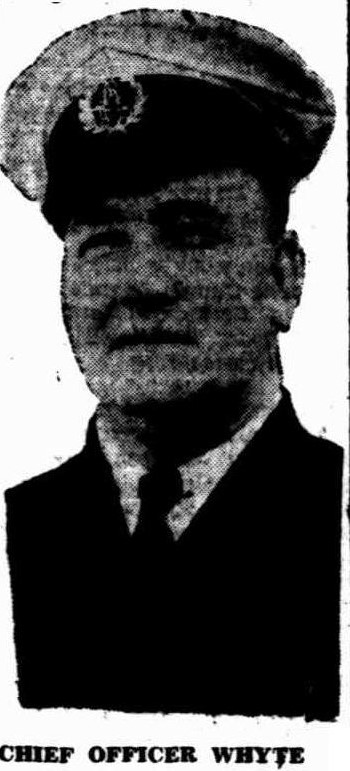
Francis Whyte came from a firefighting family which had a long association with the service in Queensland. He also played soccer in Rockhampton after the war. Whether he played locally before enlistment is unknown. Soccer had been strong in Rockhampton for decades but was struggling due to the war when Whyte arrived in 1915.
Being Scottish, it is likely Whyte was familiar with the game, and did play for his unit in the months after the war. Soccer had been regularly played by Australian soldiers during the conflict, then blossomed after armistice as units awaited demobilisation. Whyte appeared for the 3rd Infantry Brigade Battalion against a team of Belgian soldiers in May 1919. The Australian soldiers were sourced from a number of sub-units, including Whyte’s 9th Battalion. No score was recorded.
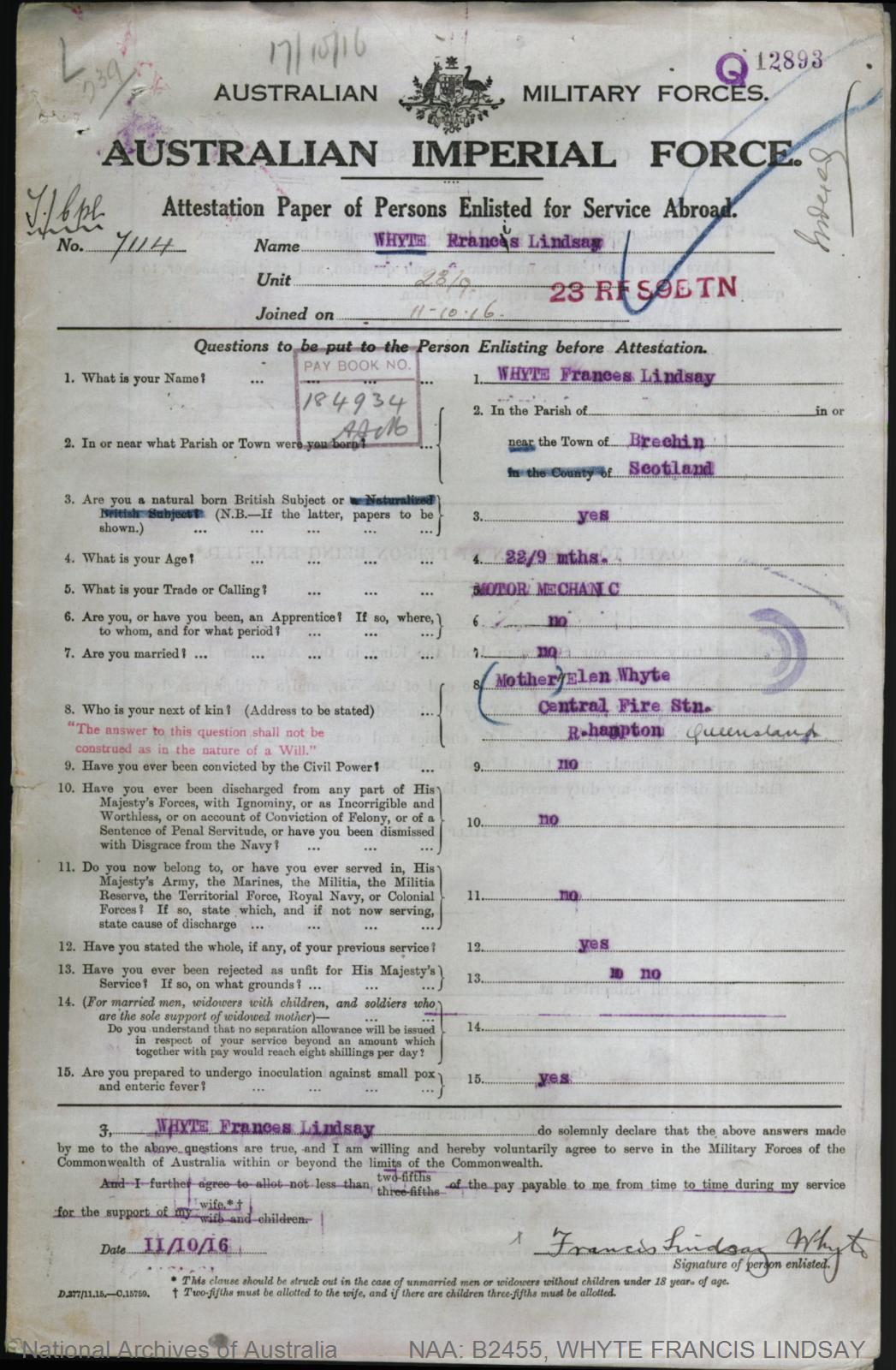
Whyte grew up in Edinburgh where he learned his trade as a motor mechanic. He joined the Clydebank Fire Brigade and later worked as a fireman and driver in Glasgow. He emigrated to Australia in January 1915 to join the Rockhampton Fire Brigade where his father was Chief Officer.
Whyte enlisted in October 1916 and was allocated to the 9th Battalion. He spent much of 1917 training In England before being sent to France in October. He was promoted to Corporal in May 1918. Three months later he was wounded in action but remained on duty.
His proudest moment came after armistice as detailed in a letter which appeared in the 7 February 1919 edition of Rockhampton’s Morning Bulletin: “I had the great honour of being picked from the battalion to be sergeant of the King’s bodyguard. It is the first time that Australians have formed the guard, so you see it is some honour all right.”
After the war, Whyte spent some months as a fireman back in Glasgow before returning to Rockhampton. Here he played soccer for Nerimbera and Thistles in the decade after the war. By 1930 he was considered an “old player”, according to the Evening News, and appeared with other veteran players in occasional charity matches.
Whyte became the deputy Chief Fire Officer of the Rockhampton Fire Brigade in 1922. In 1928 he obtained a diploma from the Institute of Fire Engineers. His duties included supervision of mechanical work and the design and build of local fire engines. In 1938 he moved to Ipswich to become the Chief Fire Officer. Almost two years later he returned to Rockhampton to take up the same position once held by his father, and was succeeded in Ipswich by his brother, a further testament to the Whyte family’s long relationship with the service.