


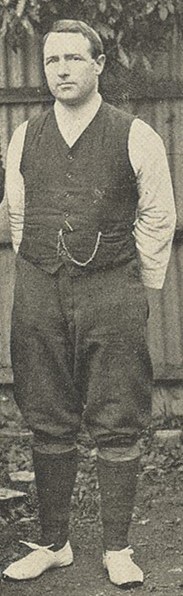
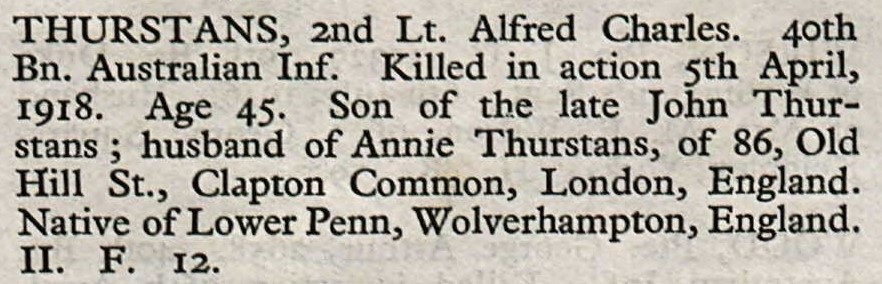
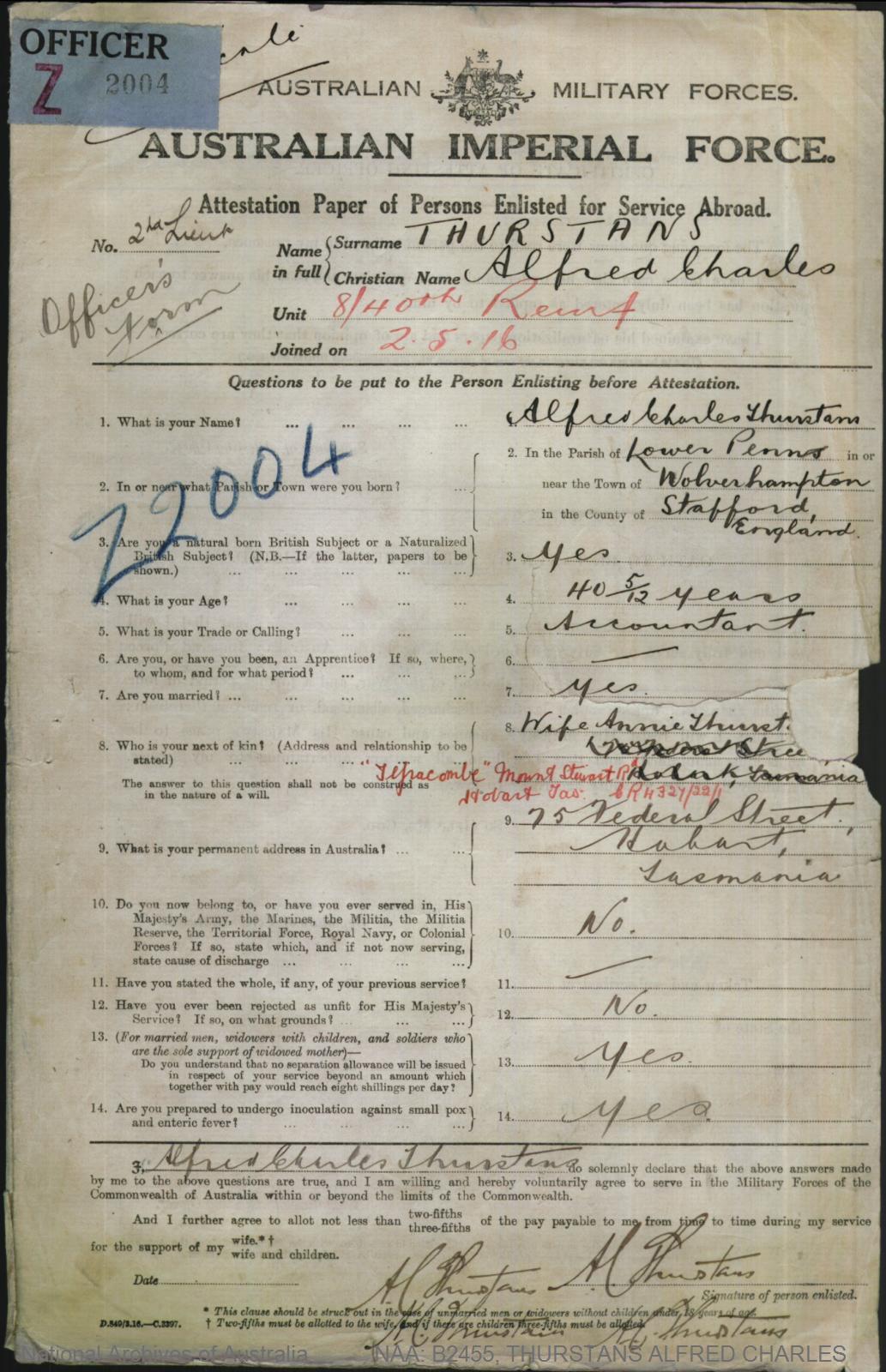
Alfred Charles Thurstans was born in Lower Penn, Wolverhampton, England in December 1875. He arrived in Tasmania in the 1900s, to join his extended family already living in the state, who had migrated to work in the mining towns on the west coast.
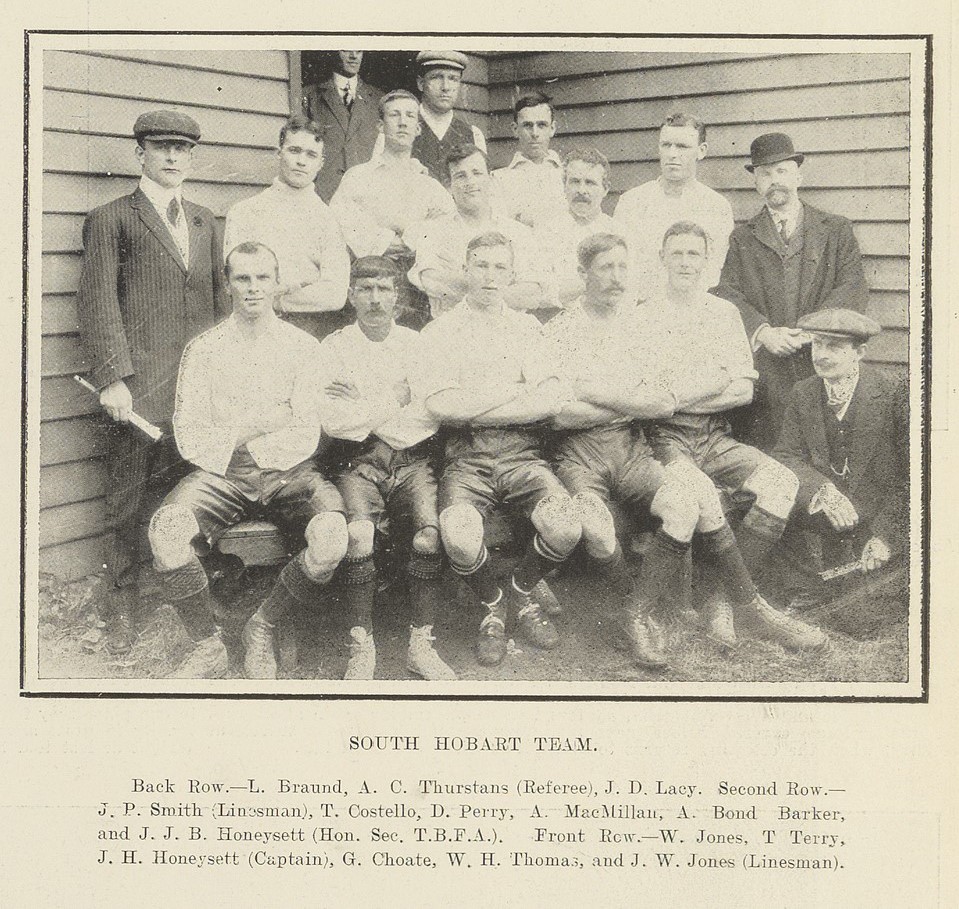
Alfred played a key role in this helping soccer get off the ground in Tasmania. The arrival to Hobart of visiting ships such as the Zealandia, combined with the enthusiasm of New Norfolk residents such as Alfred and the Honeysett family, provided the catalyst for soccer to be formally established in Tasmania. Alfred played in the initial match between a New Norfolk XI and the Zealandia in July 1908, before chairing the meeting where the Hobart British Football Association Club was founded, one of the first clubs established in Hobart. Alfred played for the club in 1908 and 1909, as well as being an active committee member.
After this season, Alfred became the leading referee in Hobart in the pre-war era. He refereed the first interstate game involving Tasmania, against New South Wales, in 1911 and the first North vs South intrastate game held in Hobart in 1912. He continued to referee matches until 1914.
Outside of his role in soccer, Alfred also played cricket, was employed as an accountant with A.G. Webster & Sons, lived at Bishopcourt (the home of Hobart’s Anglican bishops) in Sandy Bay and was on the committee of the Hobart Technical School.
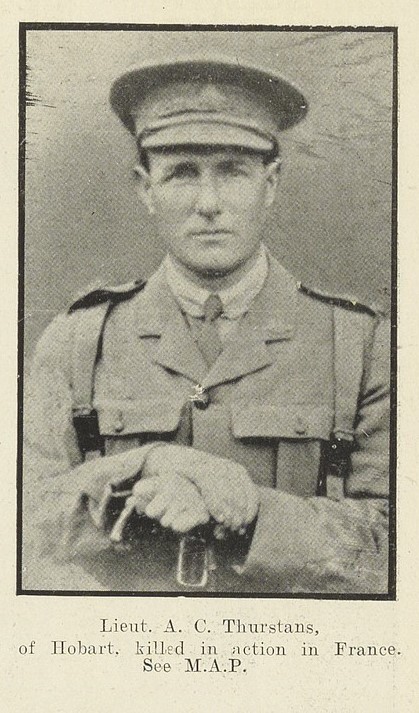
In May 1916, after the age restrictions had been lifted to 45 years old, Alfred enlisted in the forces, aged 40. He worked initially at the depot in Claremont before joining the 40th Battalion and rising to the rank of 2nd lieutenant whilst in training. He left Australia aboard the HMAT Hororata in June 1917 and was based in England for the remainder of 1917. In February 1918, Alfred was deployed to France and the western front.
His time fighting on the front was short-lived. On the 5th of April, Alfred was killed by shell fire near Morlancourt. He was one of the many casualties of the 40th Battalion at this time, as remembered many years later in The Mercury:
At the end of March, 1918, the 40th was thrown into the gap between the Ancre and the Somme during the disastrous British retreat. On the first day, near Morlancourt, the battalion advanced 1,200 yards over an area of tremendous importance, for it over-looked the whole valley of the Somme towards Amiens. In the three days of the action the battalion suffered 225 casualties.
A letter was published in The Mercury written by Lieutenant-Colonel J. E. Lord praising Alfred’s efforts in the short time he was in the forces:
My dear Mrs. Thurstans, I am writing to ask you please to accept my very deep sympathy, with you in the death of your husband. The officers of his company have written to you. I know, but I want to tell you how grieved we are: that he was always a gallant and efficient soldier, and we all had the greatest confidence in him. I saw him just after he had been killed by a shell splinter. He was killed instantly and he did not suffer. He is buried in the cemetery where we are at present and a cross has been erected over his grave. He was one of those who, from age and family considerations, might have thought to exclude himself from service, but he was too good a man for that, and, thank God, we have men of his stamp…”
He is buried at the Mericourt L’Abbe Communal Cemetery Extension (Plot II, Row F, Grave No. 12), and is commemorated in Hobart on the Soldiers’ Memorial Avenue and the St David’s Cathedral honour roll.