


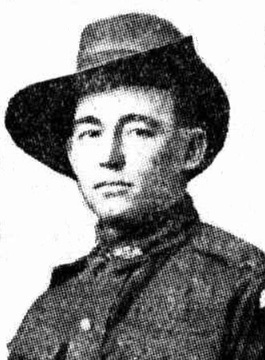

William McBride was an Australian representative player who played seven non-A international games on the tour of New Zealand in 1922. He was 36 when he played for Australia after being selected following a late withdrawal. McBride had already earned state representative honours, captaining Queensland against NSW in 1915 and 1920, the series immediately before and after the suspension of interstate football due to the war. He continued to play for Queensland later in 1920 and in 1921 under the captaincy of Thistle teammate and future Socceroo Jack Peebles and made a final appearance in 1923 against the touring Chinese XI.
McBride was born in Scotland in 1886, where he played for Parkhead Juniors in Glasgow. He migrated to Brisbane in 1913 and turned out for Bulimba Rangers before the war.
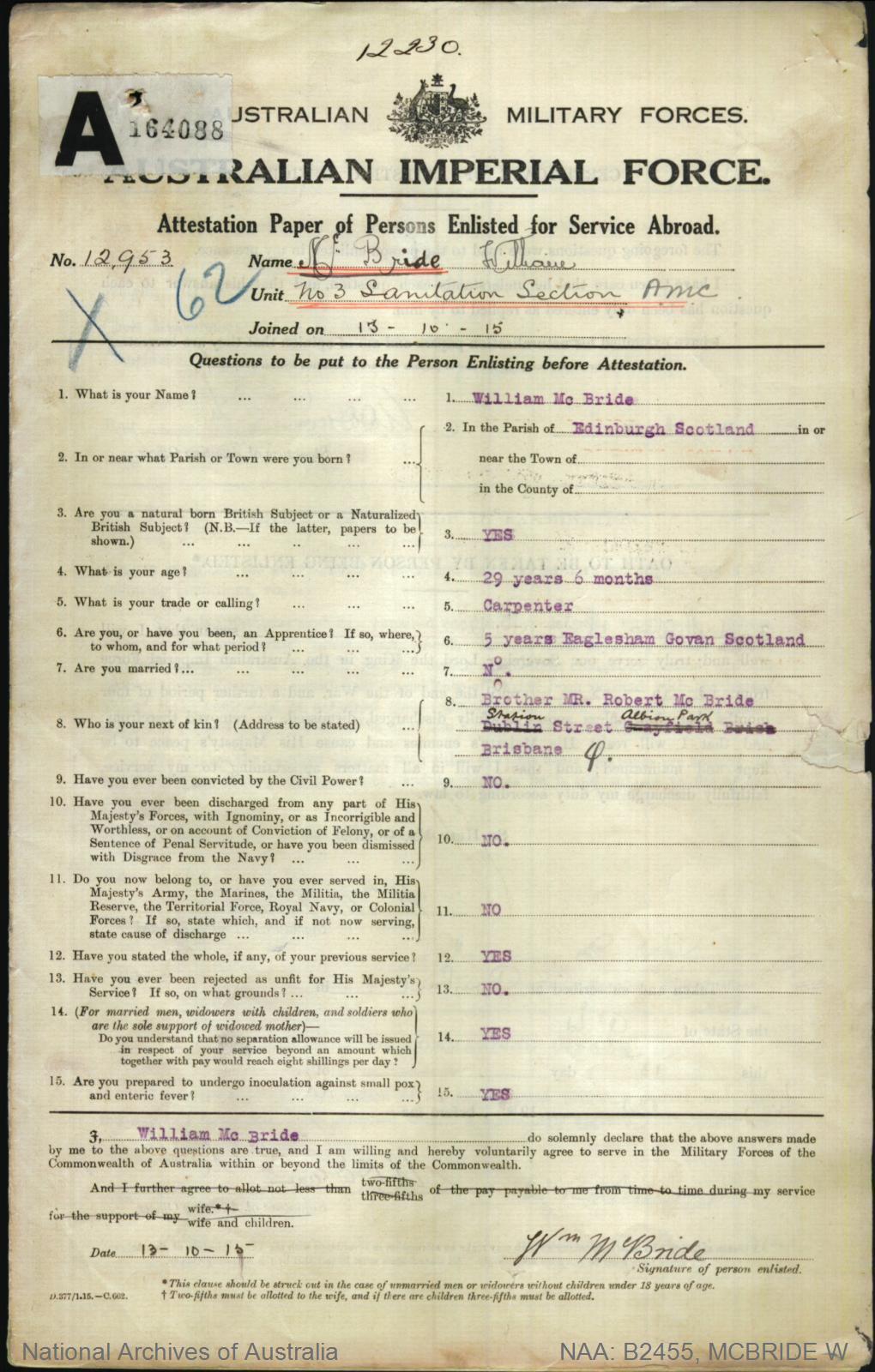
McBride enlisted in October 1915 and being a carpenter was allocated to the Sanitary Section alongside Peebles. The Sanitary Section visited military camps in the field, suggesting and building hygiene improvements designed to lower the incidents of disease among the troops. After lengthy training, he departed for Europe in 1916 and arrived in France in November.
His war was otherwise relatively uneventful, some illness aside, but did play soccer for the 3rd Australian Division soccer team, alongside Peebles and future Socceroo Wilf Bratton. He returned to Australia and Bulimba Rangers in mid-1919, winning the Charity Cup. In 1920, McBride moved to Thistles, and was also picked for the Queensland AIF team against the HMS Renown. His stint with Thistle saw him win the 1921 Charity Cup and the 1923 premiership before hanging up his boots in 1925.