
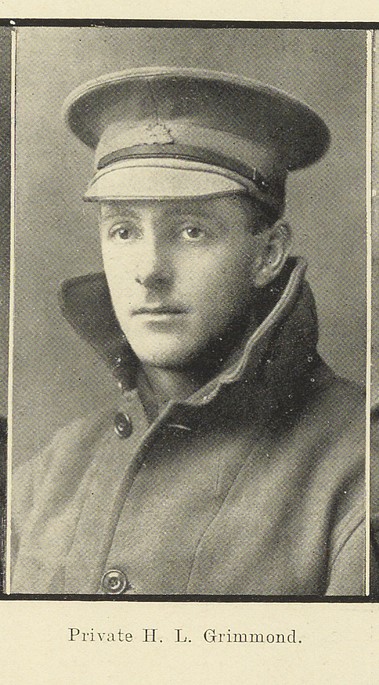
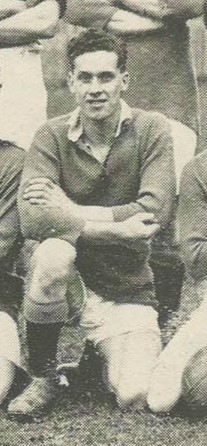
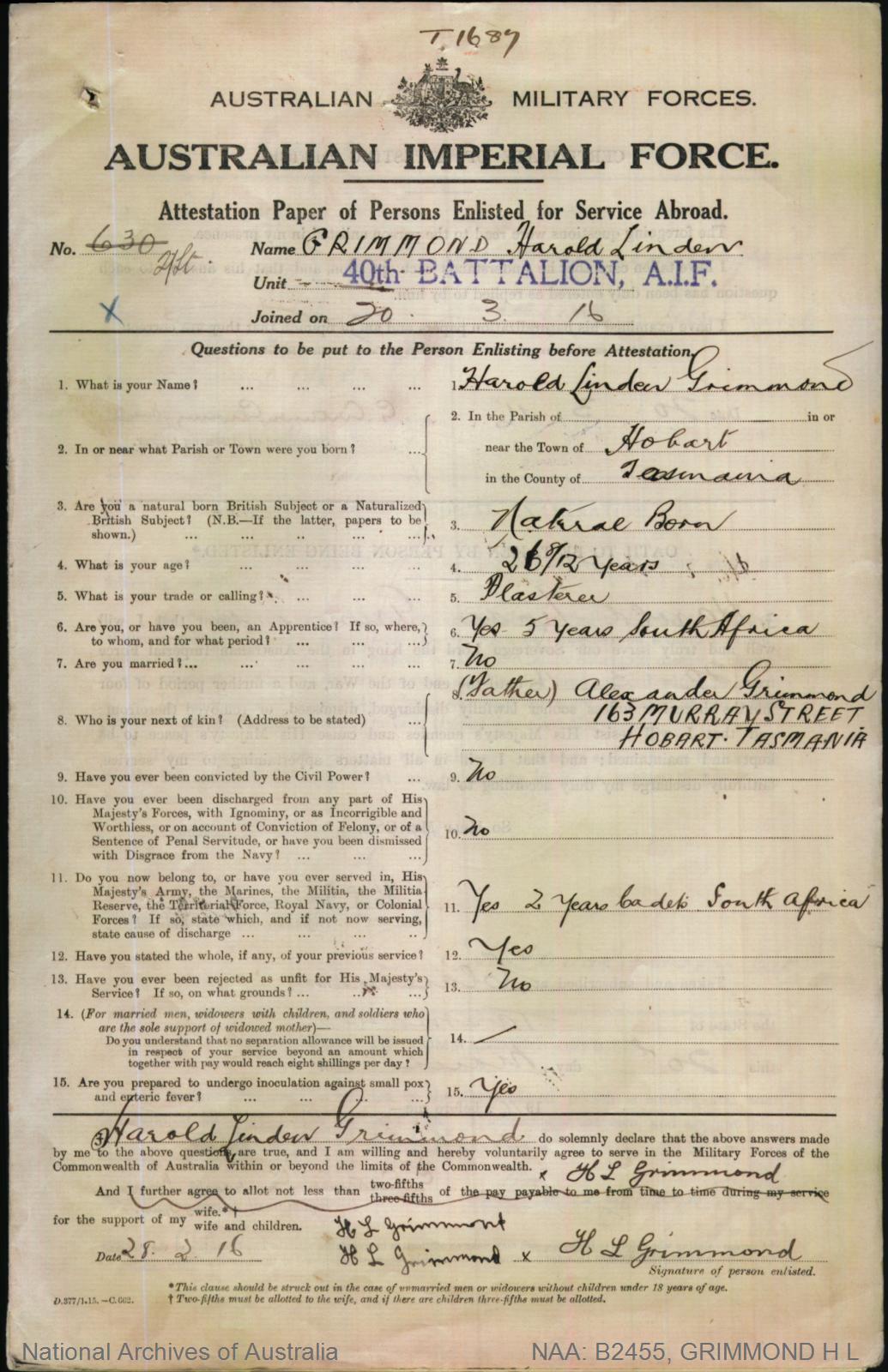
Born in Hobart on 10 May 1889, Harold Lindon Grimmond spent his youth in South Africa where his father had business interests and it was here that Harold learnt to play soccer. Upon returning to Hobart in 1908, he and his brother Alexander John (Alex) Grimmond joined the Hobart British Association Football Club at its inception. Harold played in many of the pivotal matches during soccer’s re-birth in Hobart in 1908, including matches against the S.S. Westralia and the New Norfolk club. The New Norfolk club featured J.J.B. and J.H. Honeysett, both of whom have been inducted into the Football Australia Hall of Fame for their work as pioneers of soccer in Tasmania.
In 1909, his brother Alex died after a tragic boating accident. Their boat capsized in the Derwent River and Harold had swum with Alex on his back across the river in an attempt to save him, however his brother slipped off his back exclaiming “Look after yourself Harold, I am done”.
After an absence of four seasons, Harold returned to the pitch with the St George side, helping them to second in the league and being selected for the southern Tasmania side for the second intrastate contest against northern Tasmania in July. Harold continued to play for St George in the truncated 1915 season while representing southern Tasmania in two intrastate matches, scoring a brace in both contests.
Harold and his cousin John Grimmond enlisted together on the 20 March 1916, joining the 40th battalion. After departing Tasmania in June 1916, Harold saw action in across France. Tasmania’s 40th battalion saw significant losses throughout the war, and Harold was part of a group who dubbed themselves ‘the lucky 8’. This group, who all shared a tent at the Claremont army camp on the 20 th March 1916, saw no loss of life and continued to march together at ANZAC services some 25 years later, a feat not matched by any other tent at the camp. Harold rose to the rank of lieutenant by the time of his return to Tasmania in July 1919.
Upon return, Harold immediately took the game up again, playing in some of the ‘friendly’ matches organised across Hobart, with a raft of other returning soldiers. When the league competition resumed in 1920, he continued to play for St George until the team folded the following year. He transferred to the Corinthians side and in 1923 moved to Sandy Bay.
Now aged 34, Harold had the finest season of his career. He helped Sandy Bay into 2nd place in the league and won his first trophy, the Falkinder Cup competition. After impressing in a trial match and with the unavailability of the first choice inside-left, he received his first interstate call-up for the match against the visiting Chinese Universities side at North Hobart Oval. In the first half, Harold scored the opening goal of the match, with a near-post header. Tasmania defeated the visitors 2-1, securing one of Tasmania’s most famous victories. Grimmond’s Sandy Bay side became a dominant force in Tasmanian soccer, winning back-to-back state titles in 1924 and 1925 and he continued to play until the early 1930s, well into his 40s. In 1928, he began transitioning to other roles within in the game including refereeing, being elected a member of the state council and coaching junior teams.
In 1929, Harold donated a fine cup, to be given to the winners of the southern Tasmania league competition. This cup was still used in the postwar period, although fell out of favour by the association during the 1960s. Harold passed away suddenly on 27 th February 1951, at the age of 62.