



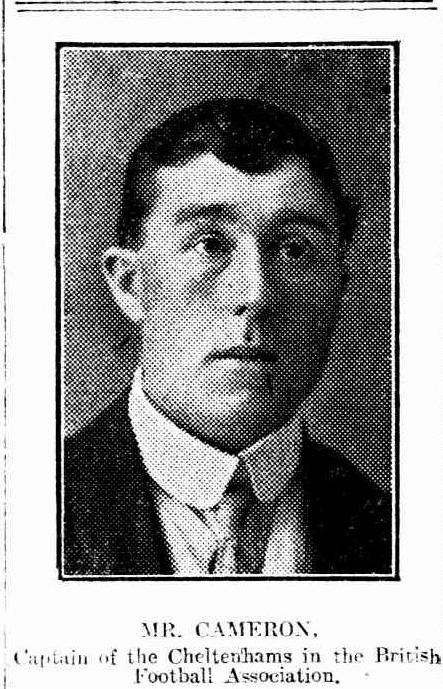
John (Jock) Cameron became South Australia’s first Socceroo when he turned out at right back for an Australian XI against the touring Chinese XI at the Sydney Showground on 18 August 18 1923. This was a 5-1 win for Australia, with ‘Judy’ Masters scoring four.
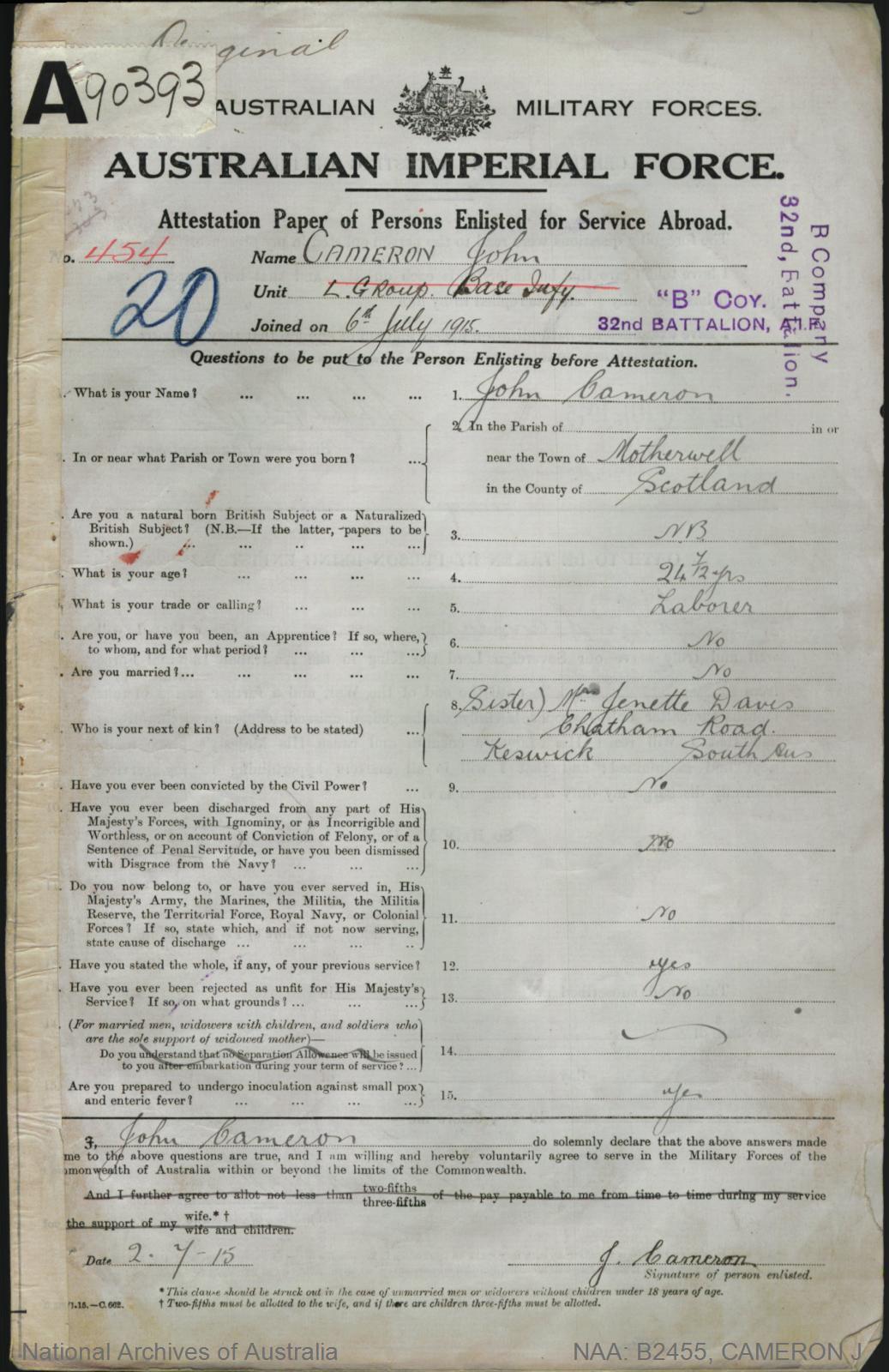
Cameron was born in Motherwell, Scotland. He arrived in Adelaide in 1911 and played in Port Adelaide’s league winning side in 1912. He went with the breakaways to establish the Cheltenham club in 1913, and was captain when Cheltenham won their first league title in 1915. However Cameron did not see out the season as he had enlisted at Keswick Barracks on 6 July 1915.
He was 24 and gave his occupation as Labourer. Serving with the 32nd Battalion he was fortunate to miss the Battle of Fromelles in July 1916 when his unit suffered 75 per cent casualties. Other major battles in 1917 were missed as Cameron was on detachments guarding bases and supply depots.
The usual illnesses and minor misdemeanors were recorded (a problem for Scottish soldiers was the length of time it took to travel between Scotland and the south of England and northern France when on leave.) He was wounded at the beginning of the successful Allied offensive near Amiens in July 1918, and was amongst the earliest batches of troops to return to Australia in February 1919.
Jock Cameron was back in Cheltenham colours barely three months after returning, and he led them to the league and cup double in 1920. He also played for the Returned Soldiers against The Rest of the League. Another league title was won the following year and the Cup was won in 1922. Some accounts say he scored the winning goal in the 1922 cup final as Cheltenham beat Sturt 1-0. However, there were two Camerons playing for Cheltenham and the newspapers did not give an initial – inside right Bob was more likely the scorer. Cheltenham’s last league title was in 1923, the year he represented Australia. The Chelts were one of the three clubs who amalgamated in 1925 to form West Torrens and Jock Cameron’s final season was in the new district club’s colours. He had played twice for the SA state team, once before the war and once after.
A true Scottish Australian giant of the early South Australian game, he was described as a solid full back with a “splendid kick”.